
 SHOP








 Our Collection

 Nederlands
 Deutsch
 Français
Beauty News, Guide & Information, Vivo Red Light, Wilma
Red Light Therapy against Winter Depression
Oct
Wilma Explains:
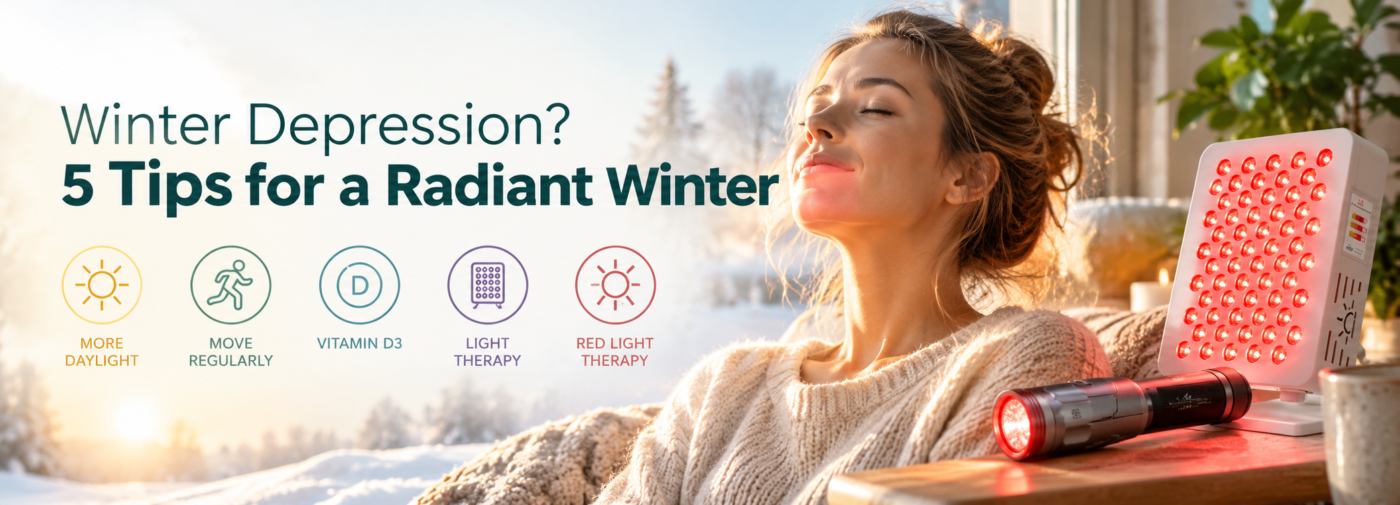
Winter Depression? 5 Tips for a Radiant Winter
In the Netherlands, and also in a lot of other European countries, we are used to short, dark, and wet winter days. Those dark months make you appreciate the long, warm summer days even more. Still, this is not true for everyone. People who are sensitive to the changing seasons can develop winter depression.
If you experience a winter dip, you will often recognise one or more of these complaints: less energy, gloomy thoughts, anxiety or worrying, difficulty concentrating, an increased appetite and social withdrawal.
What is a winter depression?
During the winter months, we get too little light. This can cause an imbalance in the hormones and vitamins in your body. It involves three things:
A shortage of dopamine, an essential neurotransmitter for your mood.
A disrupted circadian rhythm, which means you have less energy during the day and sleep worse at night.
A vitamin D deficiency. Your body needs sunlight to produce vitamin D, which is needed for a healthy immune system, among other things.
In the Netherlands alone, more than 500,000 people suffer from this every year.
What are the symptoms?
The complaints start in autumn and disappear again in spring. That is why it is also called seasonal depression. People in the Netherlands with this form of depression report the following symptoms:
Fatigue, anxiety and depression, a low libido, little motivation and energy, weight gain and a change in appetite, and a need for numbing through alcohol, drugs or, for example, gaming.
Do you notice these complaints flaring up as soon as the days get shorter and darker? Then here is the good news: you do not have to live with it. If you do nothing about it, it can unfortunately have negative effects on your health, social life, and work.
Who is at risk?
 You are only at risk of a winter depression in parts of the world where the winters have short, dark days. In addition, there are other risk factors. A winter depression is more common in women. Having had a depression before also increases your chance of a winter dip. And if family members, especially your parents, suffer from it, that is also a risk factor.
What can you do about a winter dip?
If you suffer from a winter depression, you are certainly not the only one. And fortunately, you are not the only one who recovers from it either. You can reduce the complaints with these methods:
1. Go outside, especially in the morning
Even when the sun is not shining, daylight is still present, and it helps restore your circadian rhythm. This way you sleep better and have more energy during the day.
2. Move
It does not have to be an intensive workout. Walking or cycling every day can be enough.
3. Take vitamin D3
Normally, your body produces vitamin D itself when sunlight hits your skin. In the Dutch winter months, the sun is too low and the days are too short, so your body hardly produces any. Vitamin D3 is the form your body also makes itself. It plays a role in your immune system, bones and muscles, and is also linked to your mood and energy level.
4. Try light therapy
Bright, intense light in the morning can increase your energy and improve your sleep in the evening. This method has been used for years and is recommended by doctors and psychologists.
5. Try red light therapy
Read below how it works.
Red light therapy for winter depression
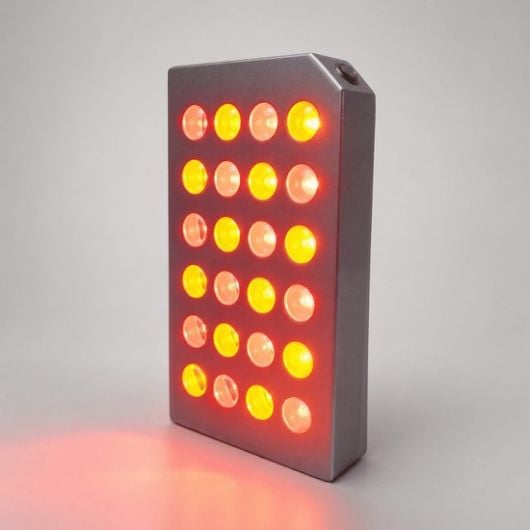 Just like regular bright daylight lamps, you can also use the VIVO Red Light therapy lamps against winter depression. It is important that you shine the light on your face, and therefore also your eyes, every morning. This can simply be done with your eyes closed.
This way you not only get sufficient light intensity, but also the extra benefits of the wavelengths in the red spectrum. The wavelengths in red light (630, 660 and 670 nm) and in the near infrared range (810, 830 and 850 nm) help your body cells produce more energy.
How does red light therapy work for winter depression?
Red light therapy can help in several ways. The main mechanisms are:
Improved blood flow. Treating the head and neck area increases the blood supply to the brain.
More energy production. The specific wavelengths stimulate the production of adenosine triphosphate (ATP), which is essential for energy production at cell level.
Increased neuroplasticity. The brain’s ability to change and adapt may increase thanks to red light therapy.
Reduced inflammation. Lower inflammation markers in the body, and specifically in the brain, have a positive effect on healthy brain function.
Red light therapy or a daylight lamp?
Besides the similarities, red light therapy has several advantages over a daylight lamp:
A healthier and younger-looking skin.
An inflammation-reducing effect deep in the body, such as in muscles, joints and tendons.
Better blood circulation, for a better supply of nutrients and removal of waste products.
Better sports performance and faster recovery.
Red Light therapy for the brain
Your mood, focus and motivation are linked to healthy brain function. Several studies have been done on red light therapy and the brain. One study shows that treating the head with red light improves cognitive function (1). Another study shows that red light stimulates the brain waves that you also see during meditation (2).

Researchers believe that the improved energy metabolism, the better blood circulation, and the inflammation-reducing effect play an important role in this.
Dr. Marc Schoen of the UCLA medical school in the United States has more than 25 years of experience treating patients with mental health conditions. In his practice, he combines psychotherapy with red light therapy. According to him, this helps patients out of a depressive state faster than any other method he has ever used.
Naturopathic and orthomolecular support
Light is the foundation, but your body also needs the right building blocks to produce mood-regulating substances such as serotonin, dopamine, and melatonin. From the perspective of naturopathy and orthomolecular medicine, these are the most important points of attention:
Have your levels checked
There is no need to guess with supplements. A blood test can check your vitamin D (25 OH vitamin D), vitamin B12, folic acid, ferritin (iron stores), and thyroid function. A deficiency or a sluggish thyroid can cause the same complaints as winter depression.
Important nutrients
Vitamin D3 with vitamin K2. Vitamin D3 works together with vitamin K2 and magnesium. Together they ensure that vitamin D is used properly and that calcium ends up in the right place. Always have the dosage determined based on your blood level.
Omega 3 fatty acids. The fatty acids EPA and DHA from oily fish (such as salmon, mackerel and herring) or algae oil are important for communication between brain cells and have an inflammation-reducing effect. They are often mentioned in relation to supporting a stable mood.
Magnesium. This mineral plays a role in relaxing nerves and muscles and in a good night’s sleep. Magnesium is used up faster during stressful periods.
B vitamins. Vitamin B6, B12 and folic acid (preferably as methylfolate) are needed to produce neurotransmitters. A B12 deficiency is more common than people think, especially in people who eat few animal products.
Zinc and selenium. Both minerals support brain function, the immune system, and the thyroid.
Tryptophan and 5-HTP. These are precursors of serotonin and melatonin. Never use them without consulting a professional if you take antidepressants, because the combination can be dangerous.
Food that supports your mood
Eat plenty of protein. Amino acids such as tryptophan (from eggs, chicken, fish, nuts and seeds, among others) and tyrosine (the building block for dopamine) come from protein.
Keep your blood sugar stable. The craving for sugar and fast carbohydrates increases in winter, but this gives a short peak followed by a dip in energy and mood. Choose wholegrain products, legumes and vegetables instead, and combine carbohydrates with protein and healthy fats.
Take care of a healthy gut flora. There is a strong connection between the gut and the brain, and a large part of your serotonin is produced in the gut. Fermented foods such as sauerkraut, kefir and yoghurt, and enough fibre, support your gut health.
Limit alcohol and sugar. They offer a moment of numbing or comfort, but they disturb your sleep and make your complaints worse in the long run.
Herbs and plants
Saffron, rhodiola and ashwagandha are used in naturopathy for low mood, stress and fatigue. St John’s wort is a well-known herb for a low mood, but it interacts with many medicines, including antidepressants and the contraceptive pill. So never use it on your own initiative and always consult a doctor, pharmacist or therapist.
Lifestyle and rhythm
Keep a fixed sleep rhythm, also at the weekend. Dim the lights in the evening and limit screen use, so your body can produce melatonin. Deliberately seek social contact, even if you would rather stay at home. Relaxation exercises such as breathing exercises, meditation or yoga help to reduce stress. Regular sauna sessions or a warm bath can also contribute to relaxation and better sleep.
Please note
These are supporting recommendations and not a replacement for medical care.
Conclusion
In most cases, you can resolve a winter depression with simple changes to your lifestyle. Simple? Perhaps not at first. But if you apply the 5 tips consistently every day, supplemented with the right food and nutrients, you are guaranteed to notice an improvement in your energy, sleep and mood.
Red light therapy takes no effort at all: simply shine the right red light photons at optimal intensity on your skin for 15 minutes a day, especially on your head and face. This makes it an ideal method for anyone who wants to optimise their health, without medication and easily from home.
Sources
- https://pubmed.ncbi.nlm.nih.gov/23200785/
- https://onlinelibrary.wiley.com/doi/10.1155/2012/951272
Take care of yourself!
With love,
Wilma
 Beauty Products
 View all
 By Skintype
 Brands A-Z
 Wellness
 Health / Nutrition