
 SHOP
SHOP












 Our Collection
 Nederlands
 Deutsch
 Français
Beauty News, Wilma
What Happens When You Exfoliate and Scrub Your Face?

Sep
When you exfoliate, you remove dead skin cells, enhancing your skin’s texture. But if those dead skin cells are part of the healthy skin barrier, is it good to exfoliate?
Difference between Exfoliating and Scrubbing:
You might think exfoliating and scrubbing are the same, but they differ significantly. Scrubbing involves rubbing a gritty product on the skin to remove the top layer of dead skin cells. However, this process might also affect the healthy cells underneath.
If you opt for scrubbing, ensure you use a very mild product. This will minimize the risk of skin damage or irritation.
On the other hand, exfoliation involves a product containing an acid, such as fruit or salicylic acid. These acids weaken the bond between your dead and healthy skin cells, making the dead cells shed easily, leaving behind soft and even skin.


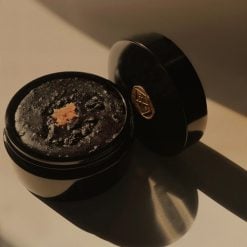
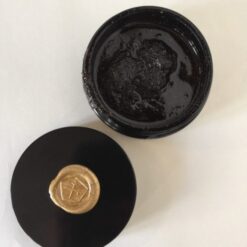


Why Do We Scrub Our Skin?
The idea behind scrubbing is to stimulate cell turnover by removing the skin’s top layer. This natural stimulation boosts skin renewal and texture improvement. Indeed, our skin, like everything in nature, aims for balance.
The Hayflick Phenomenon:
When we remove the topmost layer, which is the dead skin layer, the lower layer, where new cells are “born,” gets stimulated to produce more cells. But this overlooks the so-called Hayflick limit. The Hayflick phenomenon pertains to the number of times a normal human cell population will divide before the division process stops. We now understand that telomeres, the ends of DNA molecules in a cell, become shorter with each cell division. This continues until they reach a critical minimum length, halting division.
The progressive shortening of telomeres also means our skin doesn’t renew identically. Over time, our skin ages faster, becoming thinner. This results in a weakened natural skin barrier, leading to increased sensitivity over the years.
People who’ve frequently subjected their skin to peels often have parchment-like skin. It’s advisable to approach this with caution.
Proper Skincare Makes Exfoliating and Scrubbing Unnecessary:
If you’re using the right skincare, your skin’s pH and hydration levels are balanced, leading to proper shedding of skin flakes. This means that dead skin cells are naturally removed.
However, as we age, cell turnover becomes less efficient. If you feel the need to do something, opt for an enzymatic peel. For those suffering from acne, where proper shedding is an issue, an enzymatic peel can be considered. Unlike scrubs, enzymatic peels don’t damage the skin. But using them in cases of active acne might risk spreading the inflammation. Even with enzymatic peels, careful application is vital.
Salicylic Acid:
This acid is commonly found in peels and is now seen in daily-use tonics and lotions. From my perspective, this isn’t a positive trend, given that our skin has become increasingly sensitive over recent decades due to various products we apply.
Salicylic acid is a Beta Hydroxy Acid and, in its pure form, is harmful to the skin. It’s typically sourced from plants but is often synthetically reproduced by heating phenol with carbon dioxide.
Why shouldn’t you choose a salicylic acid-based exfoliant? Salicylic acid can etch our skin pores, enlarging them over time. Don’t we all desire smooth, fine pores?
Red Light Therapy for your Oral Health
Wilma Explains:Red light therapy for your teeth, gums and oral healthRed light therapy has quickly [...]
Oct
Red Light Therapy; Led face masks – Hype?
Wilma Explains:LED face masks: smart investment or just hype? Red light has become hugely popular [...]
Sep

(Recipe) Creamy Chocolate Mousse
As the days get shorter and the Dutch autumn weather turns cooler, there’s nothing quite [...]
Sep
Red Light used as a natural anti-inflammatory
Wilma explains: 4 Natural Anti-Inflammatories for Pain Do you often struggle with knee pain, lower [...]
Sep
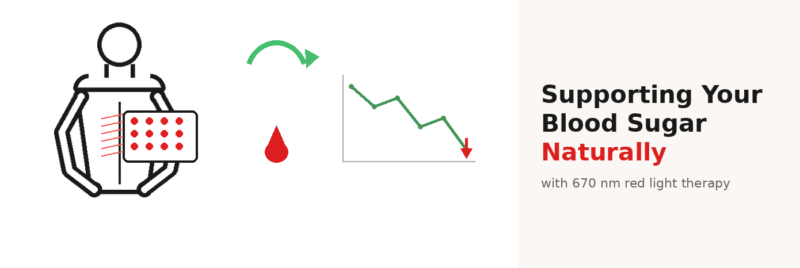
Red light and the effect on your blood sugar level
Wilma explains: Red Light Therapy and Blood Sugar: What a New Study Tells Us Do [...]
Sep

Small device, great results with Red Light Therapy
Wilma explains: Small Red Light Therapy Device: 11 Smart Treatment Spots Not everyone wants or [...]
Aug

Red light therapy and EMF radiation: is it really as safe as you think?
Wilma explains: Red light therapy and EMF: how does it actually work? Red light therapy [...]
Aug

Flicker in Red Light Therapy
Wilma explains: FLICKER IN RED LIGHT THERAPY: WHAT YOU NOTICE AND WHICH VALUES ARE GOOD [...]
Aug
 Beauty Products
 View all
 By Skintype
 Brands A-Z
 Wellness
 Health / Nutrition