
 SHOP
SHOP






 Our Collection
 Nederlands
 Deutsch
 Français
Beauty News, Guide & Information, Vivo Red Light, Wilma
Red Light Therapy and synergy with supplements
Wilma Explains:
Get More Out of Red Light Therapy: 6 Scientifically Studied Synergies With Supplements
In science, red light therapy is usually called photobiomodulation, or PBM for short. It stands out because it is a fairly simple stimulus with a broad influence on the body. You deliver light in the right dose, and your cells respond through changes in their energy metabolism, blood flow, and repair pathways, among other things.
As a naturopathic therapist and acupuncturist, I look at the person as a whole. So I don’t only look at the light itself, but also at nutrition, nutrients, plant extracts (phytotherapy), and the lifestyle around it. Together, these determine how much your body can do with a light stimulus.
In this blog, we explore one question: are there supplements or herbs that can support or enhance the effect of PBM?
The short answer: yes, several substances have been studied that performed better together with PBM than either one alone. We look at six interesting combinations: CoQ10, quercetin, curcumin, N-acetylcysteine (NAC), chia seed, and Calendula officinalis.
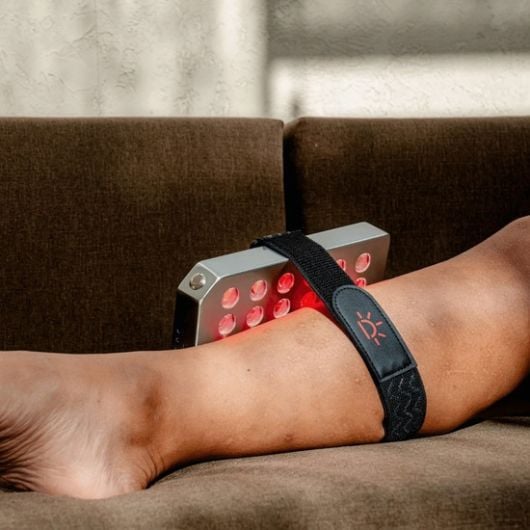 We focus on studies with the gold standard design: the substance alone, PBM alone, and the combination of both, compared side by side, so you can see whether they really perform better together.
Summary: the blog in brief
These are the key points:
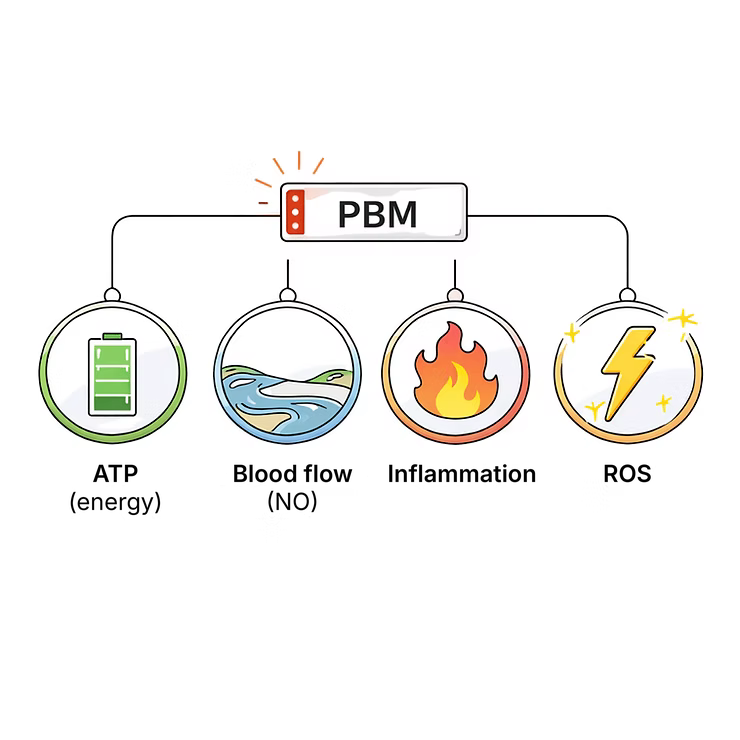
- PBM works through several routes at once. It involves mitochondria and ATP, blood flow (nitric oxide, NO), inflammation pathways and temporary ROS signals.
- Antioxidants depend on context around PBM. Sometimes they support recovery, sometimes they dampen a useful ROS signal.
- Synergy has been found in combination studies with CoQ10 (topical), quercetin, curcumin, NAC, chia and calendula (topical).
- Deficiencies can influence your response. Magnesium and copper, among others, help determine how smoothly the energy system in the mitochondria responds.
- The broader context matters. Sleep, daylight, nutrition, exercise, and stress levels help determine what your body does with a light stimulus.
How does photobiomodulation (PBM) work?
PBM usually doesn’t work through one route, but through several at the same time:
- Mitochondria and ATP: the energy production of your cells.
- Blood flow and nitric oxide (NO): NO widens the blood vessels (vasodilation).
- Inflammation pathways: lowering inflammation markers and supporting a healthy immune response.
- Reactive oxygen species (ROS): a component of oxidative stress.
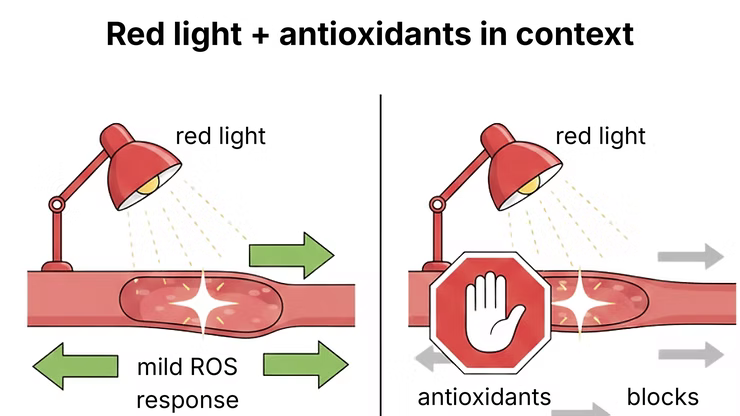
That last one doesn’t sound good, but you shouldn’t always want to suppress oxidative stress right away. A mild, temporary increase in ROS can actually be a useful starting signal that activates recovery, just like after a physical workout. (1)
Take vitamin E as an example. It is an antioxidant that can lower oxidative stress, so you would think it fits well with PBM. Yet one study found that an antioxidant based on vitamin E could slow down the vessel widening effect of red light. The authors explain this by the fact that red light works partly through a mild, temporary ROS stimulus that supports vasodilation. Antioxidants can then dampen that signal. (2)
At the same time, there are also studies in which PBM combined with vitamin E and resveratrol actually showed extra anti-inflammatory effects. (3)
So the lesson is not “vitamin E is good” or “vitamin E is bad”. It depends on what you use it for and how you use it. Vitamin E oil on the skin, for example, can fit perfectly well shortly after a red light skin treatment, as antioxidant aftercare and to support the skin barrier.
6 synergies with red light therapy that have been tested in studies
The combinations below were set up in studies so that the substance alone, PBM alone and the combination were compared with each other. In all of these cases, the combination scored better than either of the two separately.
1. Coenzyme Q10 (topical) + PBM
Studied for: wound healing.
PBM with topical CoQ10 gave better wound healing than PBM alone and also better than CoQ10 alone. The hypothesis is higher ATP production. (4)
 2. Quercetin + PBM
Studied for: wound healing and inflammation reduction.
The combination group had better wound healing than PBM alone and quercetin alone. In the combination group, the markers for inflammation and oxidative damage also dropped more than in the separate groups. (5)
3. Curcumin (nanoparticles) + PBM
Studied for: wound healing.
PBM with curcumin nanoparticles showed the fastest wound closure and the best recovery outcomes, including new tissue quality, compared with PBM alone or curcumin alone. (6)
4. N-acetylcysteine (NAC) + PBM
Studied for: lung inflammation and airways.
In a model of lung inflammation, red light with NAC worked better than red light alone or NAC alone. There was less inflammation and less “stress” in the cells. A possible explanation is that this combination lowers NF kappa B, the main switch of inflammation, more strongly. (7)
5. Chia seed (supplementation) + PBM
Studied for: eye health (diabetic retinopathy).
In a model of diabetic retinopathy, PBM with chia performed better than PBM alone or chia alone. This applied to outcomes that say something about the health of the retina and the preservation of photoreceptors, the light-sensitive cells with which you see. In other words: the combination seemed to protect the retina better. (8)
6. Calendula officinalis (topical) + PBM
Studied for: diabetic foot ulcers (foot wounds).
In a study on diabetic foot ulcers, three groups were compared: PBM, calendula (topical) and PBM with calendula. The combination group had better wound outcomes than both separate treatments. By “better”, studies in this context usually mean: faster towards wound closure, less inflammation and improved healing. (9)
Bonus: selenium + vitamin D + PBM in Hashimoto’s
Studied for: Hashimoto’s.
This study does not have the design “substance alone, PBM alone and combination”. It tests something different: does PBM add an extra effect on top of supplementation? The researchers therefore compared supplementation alone (vitamin D and selenium) with the same supplementation plus PBM, aimed at the thyroid.
The group with PBM and supplementation showed more favorable changes than the group with supplementation alone. These included a lower TSH, lower TPO antibodies and TG antibodies, and a lower required T4 dose. (10)
The researchers write that their results showed for the first time that PBM can not only improve thyroid function, but can also lower the antibodies responsible for damage to the thyroid structure in patients with Hashimoto’s. In addition, it reduced the need for T4 medication and also the overweight in these patients.
Overview in a table
Stof | Focusgebied | Wat in studies sterker werd met PBM
Substance | Focus area | What became stronger with PBM in studies
CoQ10 (topical) | Wound healing | Faster and better recovery, hypothesis: more ATP
Quercetin | Wound healing and inflammation | Stronger decrease in inflammation and oxidative damage
Curcumin (nano) | Wound healing | Faster wound closure, better tissue quality
NAC | Airways and inflammation | Lower inflammation signals and less intracellular ROS
Chia | Eye health (model) | Better outcomes for retina and photoreceptors
Calendula (topical) | Wound (diabetic foot) | Better wound outcomes, often with “light first”
Selenium + vitamin D | Thyroid (Hashimoto’s) | More favorable values and antibodies, compared to supplementation alone
Extra: 2 interesting combinations
These combinations have indications in research, but the evidence is not yet as solid and repeatedly confirmed as for the six synergies above.
1. Melatonin + PBM for bone formation and bone repair
In cell and animal research, PBM alone, melatonin alone, and the combination were compared. PBM with melatonin scored better on markers of bone repair and mineralization than either of the two separately.
A caveat: there is as yet no hard clinical evidence that the same combination gives the same effect in humans. (11)
2. Copper peptide (GHK Cu) + PBM for collagen signals
Studied for: collagen and repair processes in the skin.
In this study, GHK Cu, a copper peptide, was added to cultured skin cells in the lab. The researchers compared light alone, GHK Cu alone, and the combination. The cells involved were fibroblasts, the “collagen factories” that build connective tissue. GHK Cu with PBM produced stronger signals around growth factors and collagen production than light alone. (12)
PBM switches the system on; building blocks determine what you can do with it
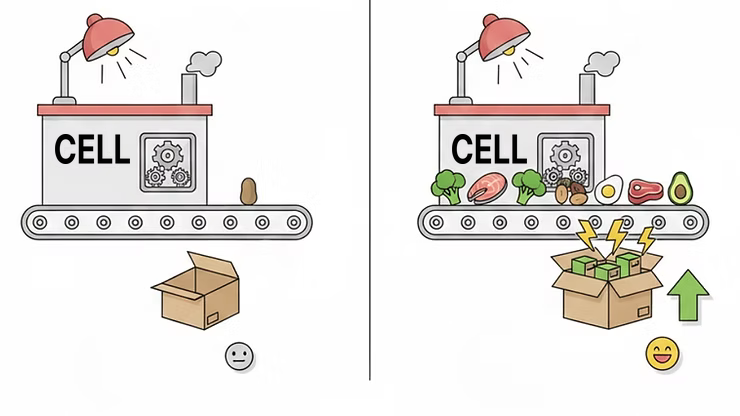
PBM and mitochondria: prerequisites for energy
Red light therapy works primarily on energy metabolism. You give a light stimulus and your cells respond with changes in mitochondrial activity and energy production, among other things.
That is why it makes sense to look not only at the light, but also at the prerequisites of that same energy system. What else does a cell need to keep that energy production running well?
Copper: part of the cell’s “solar panel” (CCO)
In the mitochondria sits the enzyme cytochrome c oxidase (CCO). It is a copper-containing enzyme that is often named as an important target of PBM. You can think of CCO as a kind of solar panel in the mitochondria: a place where red and near-infrared light can act on the cell’s energy production chain.
In the literature, you see that a copper deficiency can lower CCO activity. (13) That does not prove that copper supplementation always makes PBM better. It does show why deficiencies can play a role in some people: if a key component of the energy chain functions less well, the system may respond less efficiently to a PBM stimulus.
NAD+ (derived from vitamin B3)
NAD+ belongs in the same corner. NAD+ helps your cells convert food into energy. It supplies, so to speak, the fuel for the mitochondria, while PBM helps the mitochondria use that fuel more efficiently to make ATP (cellular energy). (14)
You hardly take in NAD+ as such through food, but your body can convert vitamin B3 into NAD+. There is currently no direct evidence for the combination of PBM and NAD. It does give a logical hypothesis: if PBM stimulates the energy system, the NAD balance may be a factor in how much room that system has to respond.
Magnesium (magnesium ATP)
Finally, magnesium is a basic requirement for energy in your cells. ATP is usually bound to magnesium, as “Mg ATP”. Through that binding, ATP is well recognized and used in all kinds of energy processes and enzyme reactions. (15)
Without enough magnesium, energy production and energy use may run less smoothly. In that sense, PBM and sufficient magnesium logically complement each other, although magnesium itself has not (yet) been tested as a synergy in a combination study.
A broader view: what I add from practice
Supplements are only one side of the story. In my practice, I see that the outcome of a light treatment also depends on the foundation around it.
Sleep and day-night rhythm. Light is the most important timekeeper of your biological clock. Many people use red light in the morning or during the day, because it contains no bright blue light. If you use it in the evening, keep the intensity and duration modest and pay attention to how you sleep. Your body is not a machine that you can “charge” at any moment.
Daylight and fresh air. A light panel is a supplement to, not a replacement for, regular daylight. Especially in the Dutch winter months, going outside every day is a simple foundation that is often overlooked.
Nutrition and protein. Recovery requires building blocks. Think of enough protein, healthy fats (such as omega-3 from oily fish, flaxseed or chia), vegetables and minerals. Chia, among others, comes back in this blog for a reason.
Stress and resilience. People who are under tension for a long time often have a lower capacity to recover. In that case, starting calmly with a low dose is wiser than a lot and often.
Exercise and circulation. PBM supports blood flow, but regular exercise does so too. The two reinforce each other.
The acupuncture perspective
From the perspective of Traditional Chinese Medicine (TCM), we see light and warmth as yang by nature: it activates, warms and brings movement. Red light fits that nicely. In practice, low-intensity laser light is also used on acupuncture points, known as laser acupuncture. This is a needle-free way to stimulate points, for example in children or in people who don’t like needles.
An honest caveat belongs here. Research on laser acupuncture is mixed and still limited, and TCM concepts such as qi and meridians are a traditional TCM framework and not a proven mechanism according to Western science. I see them as a complementary way of looking at the body, alongside the physiological explanation we discuss in this blog. Both perspectives can reinforce each other.
Who should be extra careful?
Red light is generally well tolerated, but not the same for everyone. Be extra careful and consult a doctor or therapist first if you:
- use medication that makes the skin sensitive to light;
- are pregnant;
- have an active skin condition or a suspicious spot on the skin;
- have an autoimmune condition or use medication that you want to combine with supplements.
In addition, protect your eyes when using it on the face, if this is stated in the instructions for use of your specific VIVO Red Light device.
Conclusion: your body is one system
The body works as a whole, and that is why synergies are so interesting. PBM can give a powerful push for energy and recovery, but the body still needs the right conditions to do something with it.
From my background as a naturopathic therapist and acupuncturist, I find it very interesting to discover these synergies. At the same time, it is good to stay critical. PBM research is growing enormously, but the number of studies that test real combinations (the substance alone, PBM alone and the combination) is still limited.
See the findings, therefore, as a promising direction. Consult a doctor or therapist if you want to combine in a targeted way, especially if you use medication, have autoimmune conditions or existing complaints.
FAQ: frequently asked questions
Does red light therapy work better with supplements?
Sometimes. Especially with combinations that have been successfully tested in research with three groups: substance alone, PBM alone, and the combination.
Should you take antioxidants around a PBM session?
Not necessarily. PBM can work partly through temporary ROS signals. Extra antioxidants can, depending on goal and timing, dampen that signal.
What is the best timing: supplement first or PBM first?
With topicals (products applied to the skin) you often see “light first, then the topical”. With oral supplements, the timing depends on the goal and the mechanism of action.
Can I combine red light with acupuncture?
Yes, for sure! Some therapists use light or laser on acupuncture points alongside or instead of needles. Always discuss this with your practitioner, so the approach fits your situation.
Is this medical advice?
No. Consult a doctor or therapist if you use medication, have autoimmune conditions, or persistent complaints.
Sources
- https://pmc.ncbi.nlm.nih.gov/articles/PMC5097959/
- https://www.mdpi.com/2076-3921/13/6/668
- https://www.sciencedirect.com/science/article/abs/pii/S1876107021004430
- https://www.nature.com/articles/srep20084
- https://pubmed.ncbi.nlm.nih.gov/29477473/
- https://link.springer.com/article/10.1007/s43630-023-00411-7
- https://pubmed.ncbi.nlm.nih.gov/21142721/
- https://doaj.org/article/b486b961d0634b78b7a6ee5dd9fa8fc4
- https://pubmed.ncbi.nlm.nih.gov/27680049/
- https://pmc.ncbi.nlm.nih.gov/articles/PMC10455109/
- https://pubmed.ncbi.nlm.nih.gov/28091848/
- https://pubmed.ncbi.nlm.nih.gov/17603859/
- https://pubmed.ncbi.nlm.nih.gov/17182794/
- https://pmc.ncbi.nlm.nih.gov/articles/PMC7963035/
- https://pmc.ncbi.nlm.nih.gov/articles/PMC11557730/
Take care of yourself!
Wilma
 Beauty Products
 View all
 By Skintype
 Brands A-Z
 Wellness
 Health / Nutrition