
 SHOP









 Our Collection

 Nederlands
 Deutsch
 Français
Beauty News, Guide & Information, Vivo Red Light, Wilma
Red Light Therapy from A to Z, Part 2: Head, eyes and Sleep
Nov
Wilma Explains:
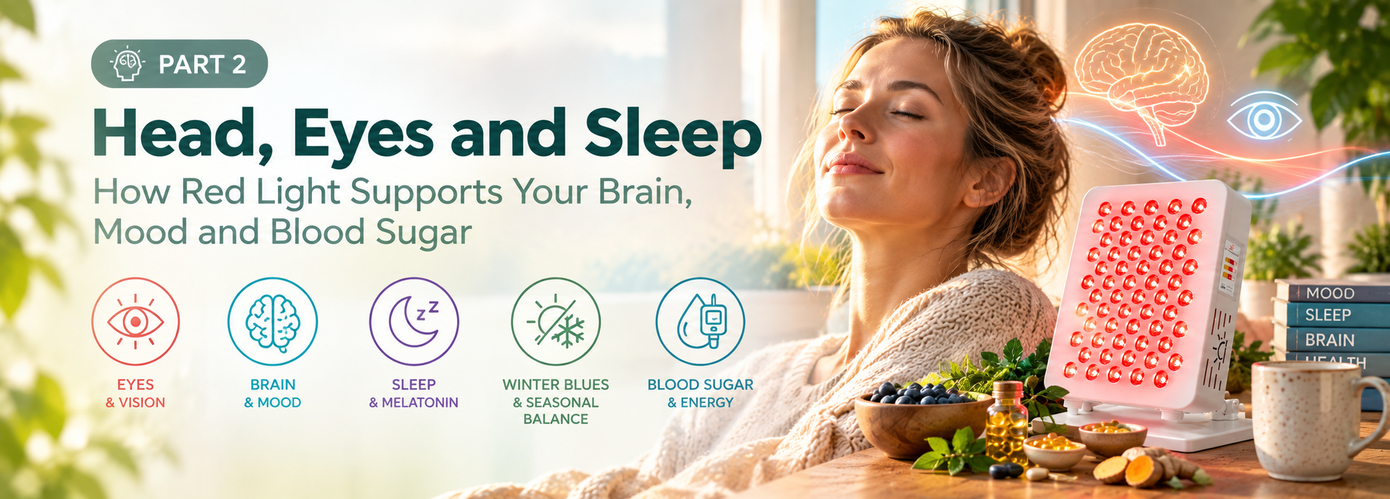
Red Light Therapy from A to Z, Part 2: eyes, brain, sleep and blood sugar.
In part 1 we looked at how red light works inside your cells and why dosage matters so much. In this second part we look at your head. Your eyes, your brain, your mood, your sleep and, surprisingly, your blood sugar too. These are the places where light has traditionally had the most effect, because your eyes are the direct link between light and your biological clock.
Your eyes: the gateway for light
Your eyes pass light information on to your brain and, through it, to the rest of your body. Your body needs bright light in the morning for a healthy day and night rhythm, and therefore for sleep, energy and hormones. This rhythm is called the circadian rhythm.
It is important to know that red light therapy does not replace natural morning light. It can be part of a healthy light routine, though. Especially in the dark months that is practical for many people.
Safe use around the eyes. With powerful devices, never look straight into the LEDs. Keep your eyes closed, choose a suitable distance and a suitable treatment time.
Red light and the ageing retina
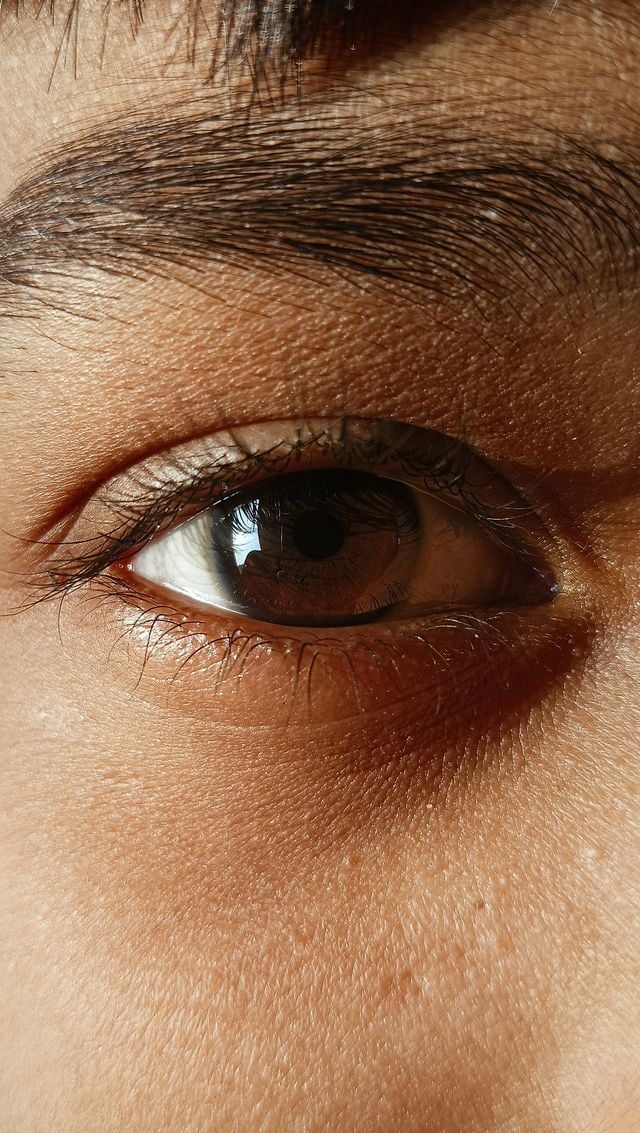 The retina has one of the highest energy demands in the body and therefore ages relatively quickly. Around the age of forty, the mitochondria in the light sensitive cells begin to decline, and you notice this as a decrease in colour contrast and in vision in the dark.
Researchers at University College London tested whether a short moment of deep red light (670 nm) could improve this. In a first study, 24 healthy people between 28 and 72 years old used a 670 nm light for three minutes every morning for two weeks. In people around forty and older, colour contrast improved significantly, and vision in low light also improved. In younger people there was no difference. In a follow up study in 2021, even a single three minute exposure in the morning turned out to improve colour contrast for a week, by about 17 percent on average. The time of day turned out to be crucial: exposure in the afternoon had no effect.
These are small studies in healthy people, carried out with a special low power light. It is therefore no reason to stare into your panel, but it does show that timing and dose matter.
Your brain: the most energy hungry organ
Your brain is only a few percent of your body weight, but it uses about twenty percent of your energy. That makes it extra sensitive to a shortage of cell energy, to oxidative stress and to inflammation. It is therefore logical that researchers test red and near infrared light on the brain.
The light enters through the forehead. There is no hair there that can partly reflect the light, and the skin is relatively thin. Research points to several possible mechanisms: more energy production, better circulation, an anti inflammatory effect and more neuroplasticity, the ability of the brain to adapt.
What does the research say about depression and mood?
This is an area where the evidence is nuanced.
- In a pilot study by researchers at Harvard (ELATED 2, 2018), near infrared light of 823 nm was given to the forehead twice a week for eight weeks to people with depression, with a sham treatment as comparison. It was a first, small study.
- In the larger follow up study (ELATED 3, 2022), researchers found no difference between light and sham treatment at a low dose. The authors concluded that a minimum dose is probably needed, as with other forms of brain stimulation.
- Ongoing studies are now comparing different doses and light patterns (continuous and pulsed). The question of which dose is optimal has therefore not been answered yet.
What can we learn from this? For depression, transcranial photobiomodulation is a field of research, not a proven treatment. Do not use it as a replacement for psychological help or medication. Light can, however, be a supportive part of the picture, for example in the winter months, as an addition to daylight, exercise and good sleep.
Winter blues and seasonal depression
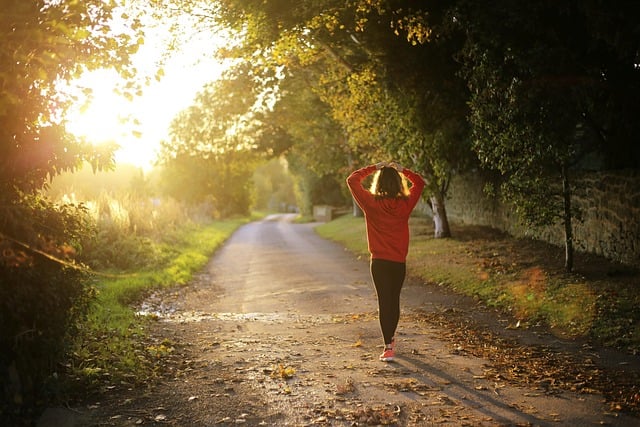 For the winter blues, bright light in the morning helps most. Go outside, even when the sun is not shining, because daylight is many times stronger than indoor lighting, even on a cloudy day. A daylight lamp is a well known and proven option. Red light therapy on the face and head can be an addition to this, with your eyes closed. About 15 minutes a day is a common starting point, but see what suits you.
Sleep and melatonin
Bright blue light in the evening suppresses the production of melatonin, the sleep hormone. Red light does not. Red and amber light are the colours that are safest to use in the evening.
There is also research suggesting that red light can raise melatonin. In a well known study from 2012, 20 elite female basketball players used red light of 658 nm for half an hour every evening for fourteen days. Their melatonin levels and sleep quality improved, and so did their endurance on a running test. It was a small group of athletes, and the results cannot simply be applied to the average poor sleeper.
There is another side as well. In a study in people with insomnia, red light before bed turned out to be no better than a dark environment. For anyone who sleeps badly, a dark, quiet bedroom is therefore at least as important as any lamp.
At the moment, controlled studies are under way in the Netherlands and elsewhere on the dosage of near infrared light in people with a sleep deficit, looking at melatonin, cortisol and heart rate variability. We are following the results.
Practical advice
- Use red light on the chest or face early in the evening, not right before bed if it makes you feel wound up.
- Dim the lights in the evening and limit screen use.
- Keep a regular sleep rhythm, also at the weekend.
Blood sugar: a surprising application
In 2024, Michael Powner of City, University of London and Glen Jeffery of UCL published a striking study. Thirty healthy adults took a glucose tolerance test twice (they drank 75 grams of glucose in water). Before the second test, half of them received 15 minutes of 670 nm red light on the upper back, 45 minutes beforehand. The other half received no light.
The light group showed a rise in blood sugar that was 27.7 percent lower, measured over two hours. The highest peak was 7.5 percent lower. The researchers explain this by saying that the cells use more glucose because of increased mitochondrial activity.
What this does and does not say. It involved thirty healthy people, with a control group that received no light. It is therefore not proof that red light treats diabetes. It is, however, an interesting indication that light influences metabolism, and that a short session before a meal may dampen the blood sugar peak after the meal. If you have diabetes or use medication, always discuss it with your doctor first.
Naturopathic and orthomolecular: for stable energy, mood and sleep
Light is the foundation, but your brain also needs the right building blocks to make mood regulating substances such as serotonin, dopamine and melatonin.
Have your levels checked
There is no need to guess with supplements. If you have persistent complaints, first have the following checked: vitamin D, vitamin B12, ferritin, thyroid values and, if needed, magnesium and zinc. Your GP can measure many of these, and home tests are available too.
The most important nutrients
 Vitamin D3. In the Netherlands we hardly make any vitamin D in the skin in autumn and winter. The Dutch Nutrition Centre (Voedingscentrum) therefore advises a supplement for certain groups, including women aged 50 up to and including 69 (10 micrograms per day) and everyone aged 70 and over (20 micrograms per day), but also people with a dark skin, people who rarely go outside and pregnant women. If your level is low, your doctor may advise a different dose.
Magnesium. Widely used for relaxation and sleep. The research is mixed. A review of controlled studies in older adults with insomnia found that falling asleep was about 17 minutes faster, but the quality of the evidence was low. A larger review from 2022 mainly showed that the studies contradict each other. Magnesium is therefore no miracle cure, but it can be useful support for some people, especially when magnesium levels are low.
B vitamins. B6, B12 and folic acid (preferably as methylfolate) are needed to make neurotransmitters. A B12 deficiency is more common than people think, especially in people who eat few animal products.
Zinc and selenium. They support brain function, the immune system and the thyroid.
Tryptophan and 5 HTP. These are precursors of serotonin and melatonin. Never use them without consulting your doctor if you take antidepressants, because the combination can be dangerous.
Food for a stable mood and blood sugar
- Eat plenty of protein. Amino acids such as tryptophan (from eggs, chicken, fish, nuts and seeds) and tyrosine, the building block for dopamine, come from protein.
- Keep your blood sugar stable. Choose whole grain products, legumes and vegetables, and combine carbohydrates with protein and healthy fats. A walk after eating helps to dampen the blood sugar peak.
- Look after a healthy gut flora. A large part of serotonin is made in the gut. Fermented foods and enough fibre support your gut (more on this in part 4).
- Limit alcohol and sugar. They give brief numbness or comfort, but disturb your sleep and make your complaints worse in the long term.
Herbs and plants
Saffron, rhodiola and ashwagandha are used in naturopathy for low mood, stress and fatigue.
Ashwagandha has the most research behind it. Reviews of controlled studies show that it can reduce perceived stress and anxiety, and that it can improve sleep slightly, especially in people with insomnia and with use for at least eight weeks. Most studies used about 300 to 600 mg of root extract per day. There are some points of attention: it can cause stomach and bowel complaints, liver damage has been reported in rare cases, and it must not be used during pregnancy. It can also affect thyroid values, so consult your doctor if you have thyroid complaints.
St John’s wort is a well known herb for low mood, but it has many interactions with medication, including antidepressants and the contraceptive pill. Never use it on your own initiative.
Lifestyle and rhythm
 Keep a regular sleep rhythm, also at the weekend. Dim the lights in the evening. Deliberately seek social contact, even if you would rather stay at home. Relaxation exercises such as breathing exercises, meditation or yoga help to lower stress. A warm bath or the sauna can also contribute to relaxation and better sleep.
Sources
- Shinhmar H et al. Optically improved mitochondrial function redeems aged human visual decline. Journals of Gerontology Series A, 2020.
- Shinhmar H, Hogg C, Neveu M, Jeffery G. Weeklong improved colour contrasts sensitivity after single 670 nm exposures associated with enhanced mitochondrial function. Scientific Reports, 2021.
- Cassano P et al. Transcranial photobiomodulation for the treatment of major depressive disorder: the ELATED 2 pilot trial. Photomedicine and Laser Surgery, 2018.
- Iosifescu DV et al. Very low level transcranial photobiomodulation for major depressive disorder: the ELATED 3 multicenter, randomized, sham controlled trial. Journal of Clinical Psychiatry, 2022.
- Zhao J et al. Red light and the sleep quality and endurance performance of Chinese female basketball players. Journal of Athletic Training, 2012.
- Powner MB, Jeffery G. Light stimulation of mitochondria reduces blood glucose levels. Journal of Biophotonics, 2024.
- Mah J, Pitre T. Oral magnesium supplementation for insomnia in older adults: a systematic review and meta analysis. BMC Complementary Medicine and Therapies, 2021.
- Arab A et al. The role of magnesium in sleep health: a systematic review of available literature. Biological Trace Element Research, 2023.
- Cheah KL et al. Effect of ashwagandha extract on sleep: a systematic review and meta analysis. PLoS One, 2021.
- Akhgarjand C et al. Does ashwagandha supplementation have a beneficial effect on the management of anxiety and stress? Phytotherapy Research, 2022.
- Voedingscentrum (Netherlands Nutrition Centre), supplement advice for vitamin D.
Disclaimer
These are supportive recommendations and not a replacement for medical care. If you suffer from persistent low mood, anxiety or insomnia, or if you take antidepressants or other medication, always consult your GP or practitioner before you start light therapy or supplements. Extra caution is advised in case of light sensitivity, epilepsy or eye conditions.
Continue with part 3: pain, muscles, skin, mouth and thyroid.
Take care of yourself!
With love,
Wilma
 Beauty Products
 View all
 By Skintype
 Brands A-Z
 Wellness
 Health / Nutrition