
 SHOP
SHOP






 Dutch Health Store Collection
 English
 Nederlands
 Deutsch
Votre Beaute,Guide & Informations,Vivo Red Light,Wilma
Red Light Therapy for your Oral Health
Oct
Wilma Explains:
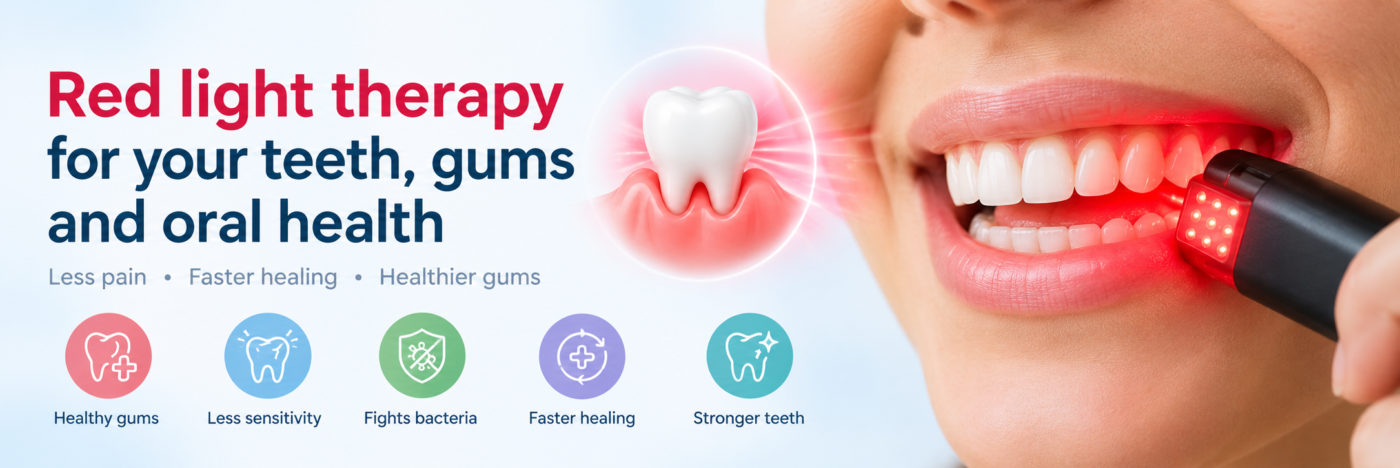
Red light therapy for your teeth, gums and oral health
Red light therapy has quickly earned a solid place as a natural and powerful treatment for all kinds of health complaints. Think of skin problems, muscle recovery and even fibromyalgia.
What many people do not know is that the same therapy can also do a lot for your mouth. It can help with receding gums, sensitive teeth, infections, pain and much more.
In this blog you will read which benefits of red light therapy for oral health are backed by science. We finish with the practical application, so you know how to get started yourself.
What you will read in this blog
How red light therapy improves oral health
- Restoring receding gums with red light therapy
- Relieving inflammation and pain with red light for the gums
- Faster healing after dental procedures with red light therapy
- Treating tooth sensitivity with red light therapy
- Red light therapy against bacterial infections and plaque
Red light therapy for common dental conditions
- Red light therapy for periodontitis and inflamed gums
- Treating mouth ulcers and mucositis with red light therapy
- Repair of cracked teeth, bone growth and dentin regeneration with red light
- Wound healing after tooth extractions with red light therapy
- Treating temporomandibular disorders (TMD) with red light
More applications from recent research
- Less pain with braces
- Better integration of implants
- Preventing mucositis: included in international guidelines
- Burning mouth syndrome
- Dry mouth
What is red light therapy?
Before we look at the dental benefits, it helps to know what red light therapy actually is. This therapy uses red and near infrared light. That light penetrates deep through the skin and reaches the tissues and organs underneath. There it sets various biological processes in motion, especially in the mitochondria, the small power plants of our cells.
As soon as the mitochondria absorb red light, they become more efficient at producing adenosine triphosphate (ATP). ATP is the energy source of the cell. Thanks to that extra energy, healing goes faster, inflammation decreases and tissue recovers better. Those are exactly the factors you need to maintain and improve your oral health. (1)
Red light therapy is not the same as infrared light therapy, which only produces heat.
Why oral health matters
A healthy mouth is about more than a bright smile. Your mouth is the gateway to the rest of your body, and poor oral hygiene can lead to serious health problems.
Research shows, for example, that periodontitis (gum inflammation) is linked to heart disease, diabetes, respiratory infections and even complications during pregnancy. (2)
Taking good care of your mouth is therefore crucial. Not only for your teeth and gums, but for your overall wellbeing.
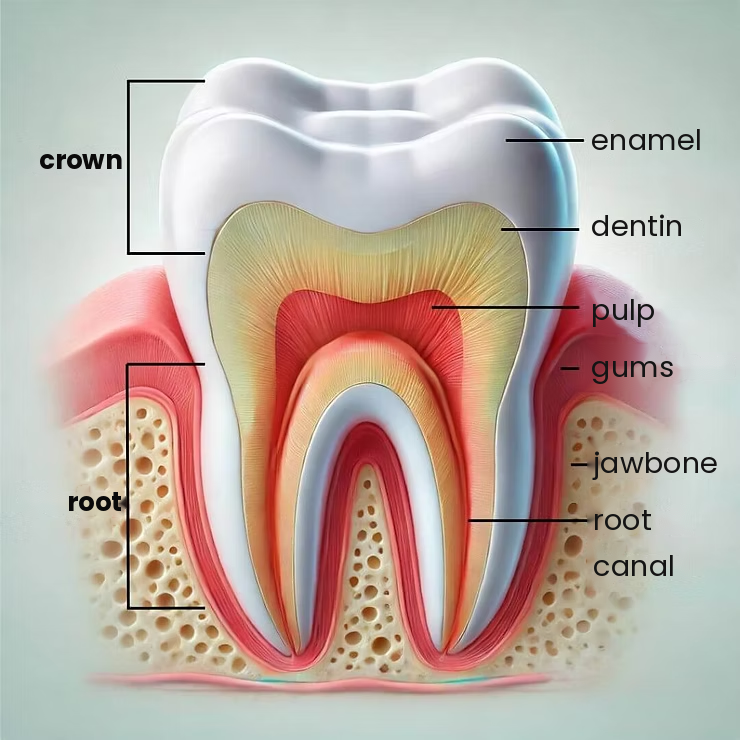
How red light therapy contributes to oral health
Restoring receding gums with red light therapy
An interesting application of red light therapy in dentistry is the possibility of letting gum tissue grow back. Receding gums are very common. Periodontitis is often the cause, but brushing too hard or hereditary factors can also play a role.
Red light therapy is a safe alternative here, because it prompts the cells in the gum tissue to regenerate. A study published in Materials (Basel) showed that red light therapy significantly reduced oxidative stress and inflammation in gingival fibroblasts (the cells that form gum tissue). At the same time, apoptosis (cell death) decreased and healthier gums were promoted. (3)
Relieving inflammation and pain with red light for the gums
Inflammation is a natural response of the body to an injury or infection. When inflammation becomes chronic, it can lead to tissue damage and disease. Because it reduces inflammation, red light therapy is particularly effective for conditions such as gingivitis and periodontitis. (4)
As the inflammation decreases, so do the accompanying complaints, such as swollen, bleeding and painful gums.
Red light therapy is also a powerful tool against pain. This pain relieving effect comes from the fact that the light reduces inflammation and stimulates the production of endorphins, the natural painkillers of the body. (5)
Whether you are recovering from a dental procedure or dealing with a chronic condition such as jaw complaints (TMD), red light therapy can offer considerable relief. (6)
Faster healing after dental procedures with red light therapy
Dental procedures can come with quite a lot of pain and a long recovery period. This applies especially to surgery such as tooth extractions and root canal treatments. Red light therapy can speed up recovery by improving blood flow to the affected area and increasing energy production in the cells. (7)
In a study among patients who had teeth extracted, the people who received red light therapy healed faster and had less pain than the people who did not receive the therapy. (8)
The explanation is that red light therapy promotes the repair and regeneration of tissue. This lowers the chance of complications such as infections or alveolitis (dry socket). (9)
Treating tooth sensitivity with red light therapy
Sensitive teeth are common and can turn eating or drinking something cold, hot or sweet into an unpleasant experience. Receding gums are often the cause, exposing the sensitive dentin. Red light therapy can help reduce this sensitivity by strengthening the dentin and promoting the growth of gum tissue. (10)
Red light therapy against bacterial infections and plaque
The antibacterial properties of light therapy are another reason why it is becoming increasingly popular in dentistry. Red light penetrates deep into the tissues to reduce inflammation and promote tissue regeneration. Blue light can also be used in a very targeted way to kill harmful bacteria in the mouth.
Research shows that exposure to blue light can almost completely eliminate certain periodontal pathogens. This makes blue light therapy particularly effective in specific cases of bacterial infections such as gingivitis and periodontitis.
Together with red light, blue light forms a powerful duo. The blue light kills bacteria and reduces plaque, while the red light keeps the inflammatory response as small as possible and promotes healing of the surrounding tissue. (11) (12)
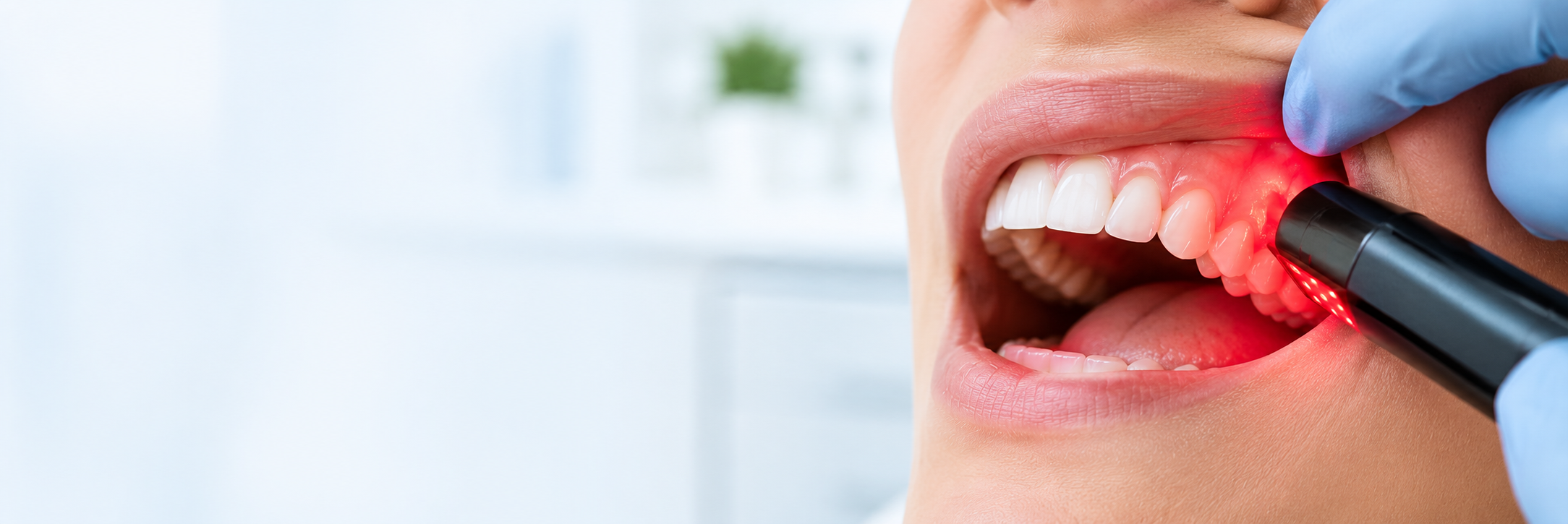
Red light therapy for specific dental conditions
1. Red light therapy for periodontitis and inflamed gums
Periodontitis can be a serious infection of the gums. If it is not treated quickly, it can lead to tooth loss. Traditional treatment consists of deep cleaning, antibiotics and sometimes surgery. Red light therapy offers a safe alternative, because it addresses the underlying cause of the disease: inflammation and bacterial infection. (4)
By reducing inflammation and promoting tissue regeneration, red light therapy helps to stop the progression of periodontitis. It also stimulates the production of collagen, which is crucial for keeping the gums firm.
2. Treating mouth ulcers and mucositis with red light therapy
Mouth ulcers, also known as canker sores, are painful and often heal slowly. Red light therapy can speed up healing by reducing inflammation and promoting tissue repair. This makes it an effective treatment for recurring mouth ulcers and for mucositis, a painful side effect of chemotherapy in which the mucous membranes in the mouth become inflamed. (13)
Recent clinical insights from April 2025 reinforce this picture. A new study in human patients with cancer in the head and neck area showed that red light therapy clearly reduces the severity of mucositis and speeds up healing. This applied both to direct application in the mouth (intraoral) and to external application with skin contact. Patients also reported less pain and a better quality of life during their treatment.
These results not only confirm that red light therapy works for mouth ulcers, they also underline how important regular application is for optimal relief of complaints. (17)
3. Repair of cracked teeth, bone growth and dentin regeneration with red light
Large cracks in teeth require professional help from the dentist. Small cracks and weakened enamel, however, can benefit from red light therapy. The light stimulates the odontoblasts, the cells responsible for forming dentin. (10)
Near infrared (NIR) light not only helps repair dentin, it also promotes bone growth. This happens because the light breaks down a certain protein, which activates processes that accelerate bone growth. (14)
Thanks to these restorative properties, red light therapy can help strengthen teeth and bones and prevent further damage. (16)
4. Wound healing after tooth extractions with red light therapy
A tooth can be extracted because of decay, damage or lack of space in the mouth. In all cases a painful wound remains that needs time to heal. Red light therapy can speed up that process by improving blood circulation and reducing inflammation. (9)
The risk of infection also becomes smaller, which makes red light therapy a valuable aid in the aftercare of a tooth extraction. (8)
5. Treating temporomandibular disorders (TMD) with red light
TMD is a condition that affects the jaw joint and the muscles around it. The result is pain, stiffness and difficulty chewing. Red light therapy has been shown to reduce pain and improve function in patients with TMD, by promoting blood flow and reducing inflammation in the affected area. (15)
Regular treatments with red light therapy can help keep symptoms under control and improve quality of life for people who suffer from this condition.
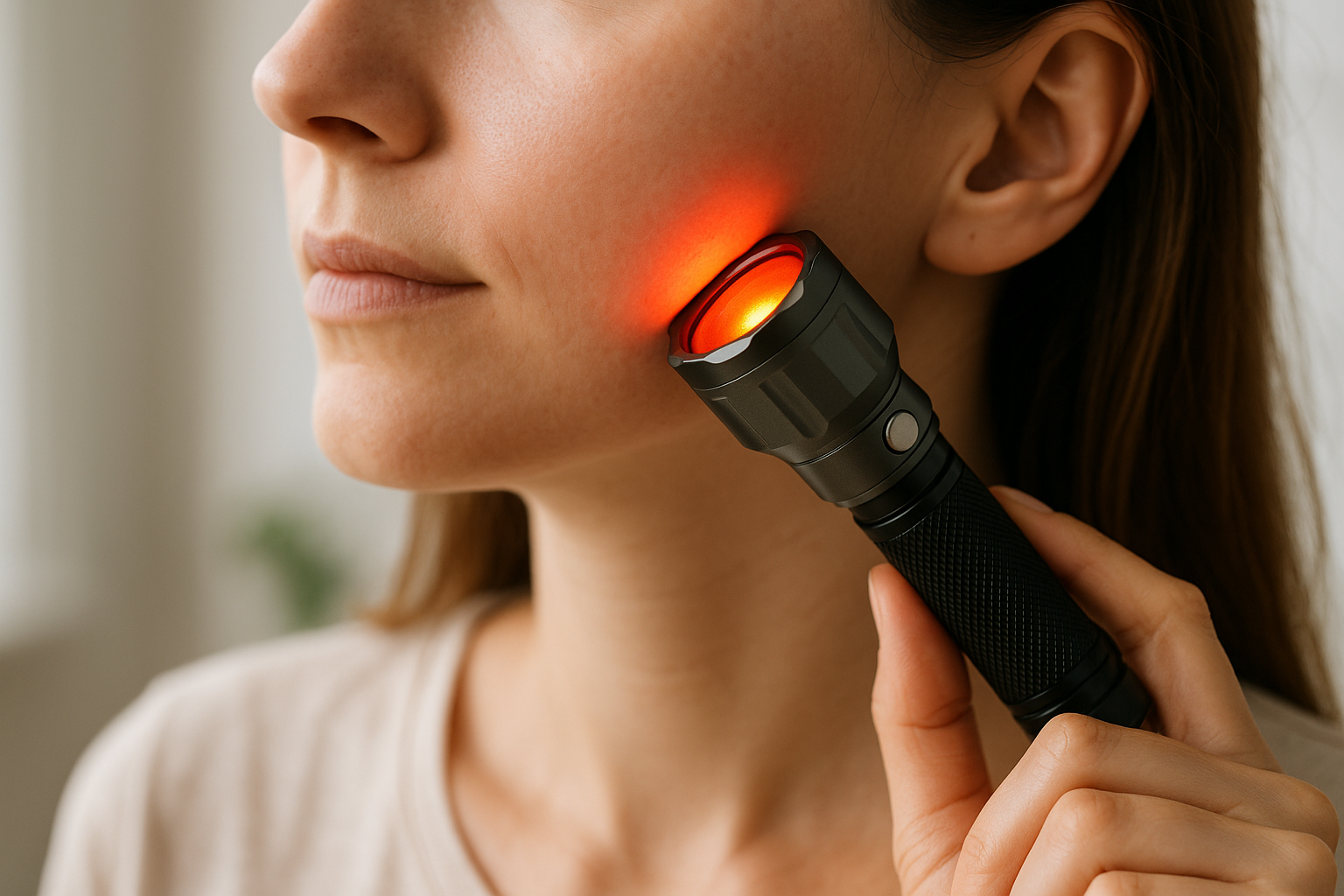
More applications from recent research
In addition to the applications above, a lot of research has been done in recent years into other areas of oral care. In the scientific literature, red light therapy is usually called photobiomodulation. Good to know: a large part of these studies was carried out in the dental practice or hospital, often with a low intensity laser. The results therefore cannot always be translated directly to use at home, but they do show how broadly the effect of red and near infrared light in the mouth has been studied.
1. Less pain with braces
Anyone who wears braces knows the painful days after they are fitted or tightened. A systematic review of 13 randomized studies looked at which wavelengths work best against this pain. In most studies, near infrared light of 780 to 830 nm emerged as the most effective range. The researchers do note that the pain reduction after 24 hours did not demonstrably depend on the wavelength. (18)
According to a recent overview, several systematic reviews support the effect of photobiomodulation on both pain and the speed at which teeth move during treatment with braces. At the same time, the protocols used vary widely and a clear guideline for practice is still lacking. (19)
2. Better integration of implants
After placement, an implant has to grow firmly into the jawbone. Because red and near infrared light stimulates bone growth, researchers have examined whether it can support this process. In an overview of 15 clinical studies, the light could be applied safely around the implant in all cases, without side effects. Six research groups saw a demonstrably better stability of the implant, at wavelengths of 618 to 1064 nm and with both laser and LED. (20)
A pooled analysis from 2024 of 26 studies with a total of 571 patients paints a more nuanced picture. With one measuring method (Periotest), stability was demonstrably better and bone density also increased. With another measuring method (ISQ), bone loss around the implant and implant survival, there was no clear difference with the control group. (21) The evidence here is therefore promising, but not yet conclusive.
3. Preventing mucositis: included in international guidelines
The strongest evidence for light therapy in the mouth comes from oncology. The international organizations MASCC and ISOO have systematically assessed the available research and recommend photobiomodulation in the mouth to prevent oral mucositis. That recommendation applies to adult patients receiving a stem cell transplant and to patients receiving radiation in the head and neck area, with or without chemotherapy. (22)
This ties in with the study from April 2025 that we discussed earlier in this blog. Application during cancer treatment always takes place in consultation with the treatment team.
4. Burning mouth syndrome
Burning mouth syndrome involves a chronic burning or painful sensation in the oral mucosa, without anything visible. A systematic review with pooled analysis of randomized studies showed that pain decreased more in the photobiomodulation group than in the control group. Quality of life also improved more. Protocols with red light in particular gave good results. (23)
5. Dry mouth
Saliva protects your teeth and gums. A dry mouth (xerostomia) is therefore not only unpleasant, but also a risk for your teeth. A systematic review of 11 studies found that treatments with near infrared light of 790 to 830 nm, a power of 30 to 120 mW and an energy density below 30 J/cm2 were associated with improvement of dry mouth and reduced saliva production. The researchers call the therapy effective, safe and noninvasive, but also indicate that there is no agreement yet on the best settings. (24)
An addition, not a replacement
However promising the research is, red light therapy does not replace the basics. Brushing twice a day with (fluoride) toothpaste, cleaning between your teeth daily and visiting the dentist or dental hygienist regularly remain the foundation of a healthy mouth. See red light as a valuable extra on top of that.
Practical application: red light therapy for oral health
Have you become curious about what red light can do for your oral health? Then you are not the only one. More and more people are making red light therapy part of their daily oral care, simply from home. But how do you go about it?
The power of the skin contact method
With the skin contact method, you place the light therapy device directly against the skin. This considerably improves how deeply the light works.
Prof. Dr. Reem Hanna (specialist oral surgeon) emphasizes that light pressure with the device increases the penetration of the light even further. This makes treatments more effective, especially for deeper tissues such as jawbone and gums.
This method is essential for optimal results in dental applications, such as promoting bone regeneration and pain relief after procedures.
Effective wavelengths and dosages for results
In the studies covered in this blog, the exact wavelengths are not always mentioned. Where they are, it stands out that 630 nm and 660 nm are often used for red light, and 810 nm and 830 nm for near infrared light. Combining different wavelengths appears to be more effective here.
Looking at dosages, we see 1 to 10 J/cm2 for superficial tissues and 10 to 50 J/cm2 for deeper tissues and pain relief.
If we translate that to the Vivo Torch 2.0, which thanks to its attachment is ideally suited for treating the teeth, the treatment time looks like this:
- At 1 to 10 J/cm2: 30 seconds to 4 minutes with skin contact
- At 10 to 50 J/cm2: 4 minutes to 20 minutes with skin contact (divided over several sessions if desired)
Red light therapy at home: benefits and applications
Thanks to technological progress, you can now easily benefit from red light therapy at home. You simply sit in front of your panel and open your mouth, so that the light shines directly on your oral mucosa, teeth and gums.
A red light therapy lamp that makes direct contact with the skin is often more effective, because with the contact method the light penetrates deeper into the tissue. Simply hold your BioPhoton against your jaw.
If you want to work on your oral health in a very targeted way, the Torch 2.0 is by far the best choice. This compact, wireless device is also safe to use with the skin contact method. Thanks to the handy extension piece, you can treat places in the mouth that are difficult to reach with a high dose of light.
Devices such as the Vivo Torch 2.0 are designed for both personal and professional use and combine red, near infrared and optionally blue wavelengths. The light penetrates deep into the oral tissues, stimulates the health of the gums, reduces inflammation and kills harmful bacteria.
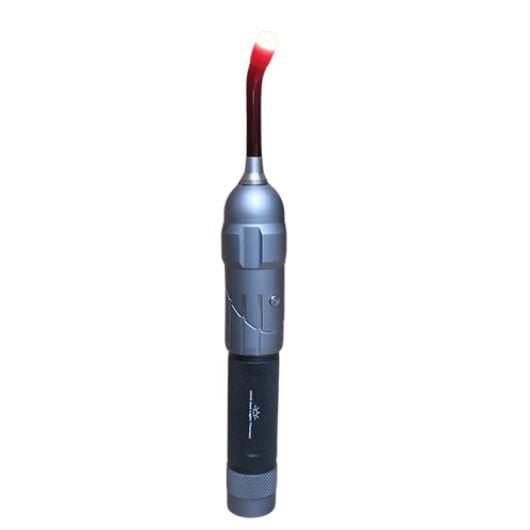
For the best results, choose short, daily sessions. Even a few minutes a day can make a big difference to your oral health in the long run. Studies confirm time and again that red light therapy is safe. Still, it is wise to consult your dentist beforehand.
The future of red light therapy in dentistry
The use of red light therapy in dentistry is still relatively new, but the research and clinical evidence for its benefits are growing fast. As more studies confirm its effectiveness, I expect red light therapy to eventually become a standard part of dental care.
From restoring gums and relieving pain to speeding up healing and fighting bacteria: red light therapy is about to fundamentally change the way we look at oral health!
Sources
- https://www.ncbi.nlm.nih.gov/pmc/articles/PMC3972568/
- https://www.mayoclinic.org/healthy-lifestyle/adult-health/in-depth/dental/art-20047475
- https://www.ncbi.nlm.nih.gov/pmc/articles/PMC8233986/
- https://pubmed.ncbi.nlm.nih.gov/24617449/
- https://pubmed.ncbi.nlm.nih.gov/27419354/
- https://www.ncbi.nlm.nih.gov/pmc/articles/PMC6530159/
- https://pubmed.ncbi.nlm.nih.gov/32198660/
- https://www.ncbi.nlm.nih.gov/pmc/articles/PMC8276937/
- https://www.ncbi.nlm.nih.gov/pmc/articles/PMC8164900/
- https://link.springer.com/article/10.1134/S1054660X10130153
- https://www.ncbi.nlm.nih.gov/pmc/articles/PMC3882849/
- https://pubmed.ncbi.nlm.nih.gov/26241781/
- https://www.ncbi.nlm.nih.gov/pmc/articles/PMC7736945/
- https://www.nature.com/articles/s41368-022-00207-y
- https://www.ncbi.nlm.nih.gov/pmc/articles/PMC6530159/
- https://www.ncbi.nlm.nih.gov/pmc/articles/PMC10253352/
- https://pmc.ncbi.nlm.nih.gov/articles/PMC11989608/
- https://www.em-consulte.com/article/1415172/a-systematic-review-of-the-effective-laser-wavelen
- https://wjgnet.com/2222-0682/full/v13/i5/379.htm
- https://pmc.ncbi.nlm.nih.gov/articles/PMC10024586/
- https://doaj.org/article/6595bc314f374e88bef521247e43cf11
- https://pubmed.ncbi.nlm.nih.gov/31286228/
- https://pmc.ncbi.nlm.nih.gov/articles/PMC9148274/
- https://digibug.ugr.es/handle/10481/87509
Take care of yourself!
Wilma
 Produits de beauté
 Marques A-Z
 Bien-être
 santé et nutrition