
 SHOP









 Dutch Health Store Collectie

 English
 Deutsch
 Français
Beauty Tips, Gids & Informatie, Vivo Red Light, Wilma
Red Light Therapy from A to Z, Part 3: Pain, muscles, skin, mouth and thyroid
nov
Wilma Explains:
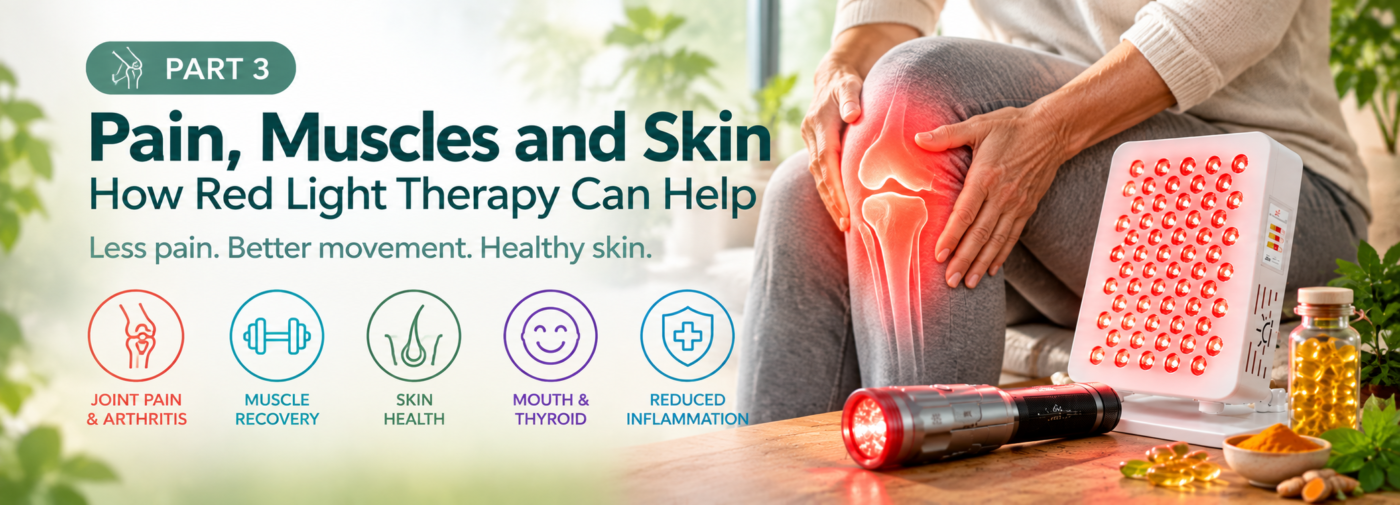
Red Light therapy from A to Z, part 3: pain, muscles, skin, mouth and thyroid.
After the head, this third part moves on to the body. This is where most of the research is. Pain, muscles and skin are among the best studied applications of photobiomodulation. Less is known about the mouth and the thyroid, but there is interesting new work there too. For each topic you will read how strong the evidence is, how to apply it in practice and which nutrients go with it.
Pain, muscles and joints
Near infrared light penetrates deeper than visible light and reaches muscles, tendons, connective tissue and joint capsules. There it can stimulate inflammation control, circulation and cell repair. It is therefore the most widely used application in physiotherapy practices and among athletes.
What does the research say?
- Chronic pain. A systematic review of controlled studies from 2026 found that most studies showed a clear reduction in pain, especially in fibromyalgia and nerve pain. Function and quality of life sometimes improved as well.
- Muscle pain in the neck and shoulders. A meta analysis of 16 studies on myofascial pain of the upper trapezius muscle concluded that photobiomodulation reduces pain and raises the pain threshold, even more so in combination with exercise therapy.
- Injured athletes. A meta analysis from 2024 of six controlled studies with 205 athletes showed a clear reduction in pain. It did not turn out to bring athletes back to competition any faster, but that was based on only two studies.
- Muscle soreness after training. A recent meta analysis of 13 studies found that photobiomodulation reduced muscle soreness immediately after training and after 24 hours, and that muscle strength was better preserved. After 48 hours and longer, the difference in perceived pain was no longer clear. There was also no consistent link between dose and effect. The outcome therefore depends strongly on the protocol.
- Other conditions. An umbrella review of meta analyses (2025) mentions, among others, knee osteoarthritis, fibromyalgia, neck pain, tendon problems, carpal tunnel syndrome and jaw joint problems. The quality of those meta analyses varies from low to high.
The common thread: photobiomodulation appears to be able to reduce pain effectively, but the studies differ enormously in device, wavelength, dose and schedule. There is no universal protocol. That is also why we say: start low, build up gradually and listen to your body.
In practice
- Aim the light at the painful area. For deeper structures, use skin contact with light pressure.
- A good starting routine for arthritis, for example, with the BioPhoton 3.0 is two sessions of 15 minutes per day, five days a week. Alternate between problem areas, such as hands, feet, neck and lower back, and keep this schedule up for a few weeks.
- Do you notice a strong reaction in the early phase, such as extra fatigue, headache or temporarily more pain? Then take a step back in time or frequency.
- Keep moving. Many physiotherapists combine photobiomodulation with exercise therapy, dry needling or massage.
Arthritis and osteoarthritis
For arthritis and osteoarthritis, red light is one of the most widely used applications, and in practice we see very positive experiences here. What does the research say?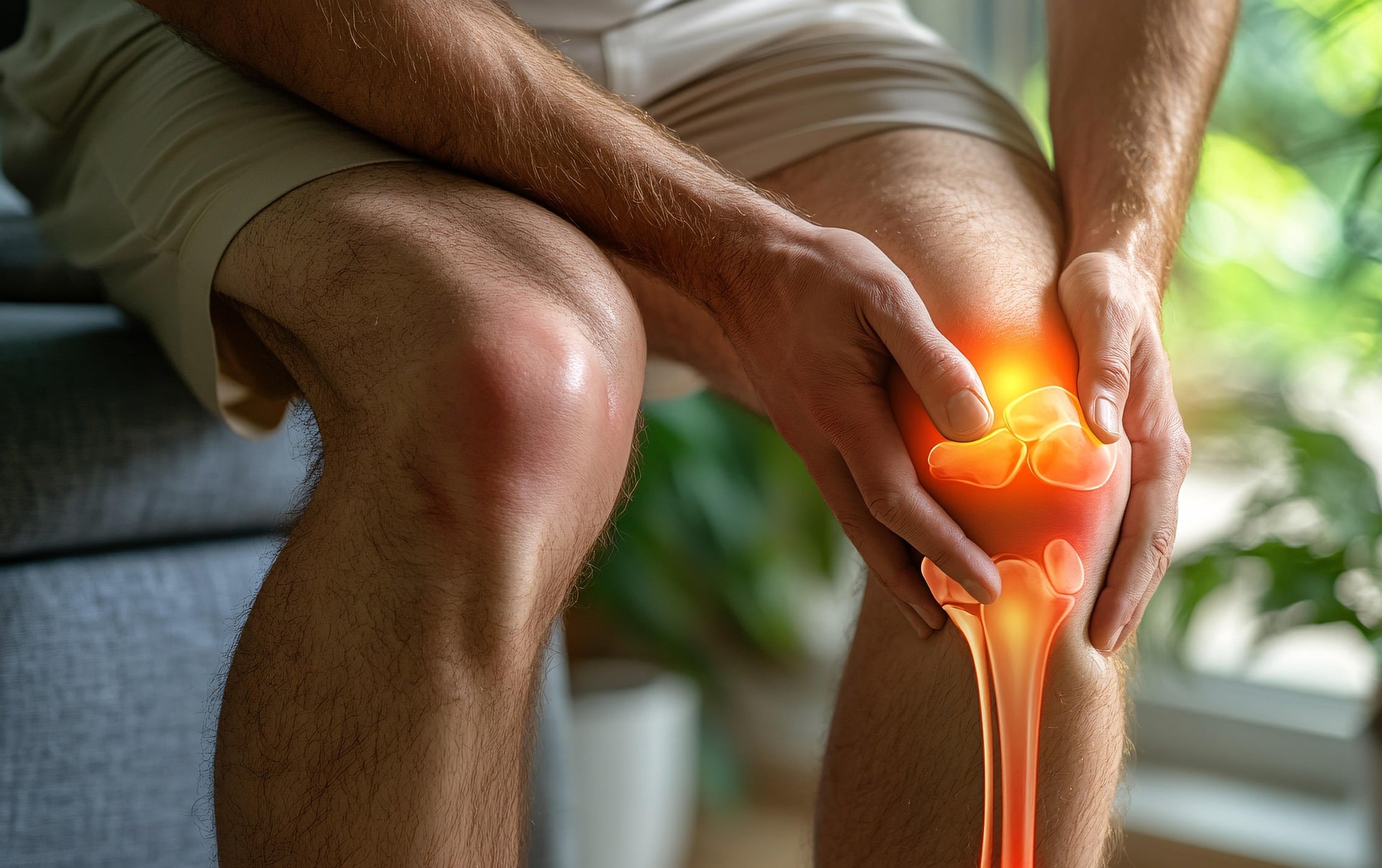
- Knee osteoarthritis. A meta analysis of 22 placebo controlled studies (Stausholm, 2019) found that low energy laser light reduced pain by about 14 mm on average on a scale of 0 to 100, immediately after treatment and in the weeks that followed. In studies that followed the recommended doses the effect was larger: about 19 mm immediately after treatment and 23 mm in the weeks after, with a peak two to four weeks after the end. Limitations in daily functioning also decreased. No side effects were reported.
- Rheumatoid arthritis. A Cochrane review of five placebo controlled studies with 222 patients found that laser light reduced pain in the short term by about 1 point on a scale of 1 to 10 and shortened morning stiffness by about 28 minutes. The effects did not last long after the end of treatment, and most studies treated the hands.
- The overall picture. There therefore seems to be a clear pain relieving effect, especially in the short term. Dosage matters here: studies that followed the recommended doses did better. Note, however, that these are mainly laser studies, which cannot be translated one to one to LED devices.
An example from practice. Take a woman of 60 with severe arthritis and a lot of pain. She deliberately keeps moving a lot (garden, housework, dogs) so that she does not stiffen up. For her, 2 sessions of 15 minutes per day, five days a week with the BioPhoton 3.0 is a good start. She has several problem areas, such as hands, feet, neck and lower back, so she can spread the sessions out and alternate between them. In some short term studies you see higher doses, but you do not need to recommend those to everyone as standard. Keep this schedule up for a few weeks first. If she responds well and wants to do more, she can build up gradually. Many people see the best results within one to four months, depending on the severity of the complaints. Does the body react strongly, for example with extra fatigue, headache or temporarily more pain? Then take a step back.
Naturopathic and orthomolecular for arthritis. Light supports energy production and circulation in the tissue, but with arthritis, inflammation, nutrition and a shortage of building blocks often play a role too. Many therapists therefore look at:
- Omega 3 fatty acids (fish or algae oil): support the inflammation balance.
- Curcumin (with piperine or in a well absorbable form): widely used for joint inflammation.
- Boswellia serrata: traditionally used for joint pain and stiffness.
- Green lipped mussel and willow bark (Salix alba): natural remedies used for joint complaints.
- Vitamin D3 with K2: in many people with rheumatism and arthritis the vitamin D level is too low.
- Magnesium: for muscles, nerves and pain perception.
- Collagen, vitamin C and MSM: building blocks for cartilage and connective tissue.
An anti inflammatory eating pattern also helps, with less sugar, processed foods and excess red meat, and more vegetables, oily fish and herbs such as ginger and turmeric. Pay attention to the balance between omega 3 and omega 6: a Western diet often contains far too much omega 6. More oily fish, flaxseed and walnuts help to restore that balance. Many people with joint complaints find acupuncture supportive for pain and stiffness, and it can be a nice addition to light therapy, as long as you build up both gradually and have them coordinated by a therapist.
Note. Curcumin, boswellia, omega 3 and willow bark can interact with blood thinners and anti inflammatory medication. If you have rheumatism or use medication, always consult your GP or rheumatologist and never stop your medication on your own.
Naturopathic and orthomolecular for pain and recovery
Omega 3 fatty acids (EPA and DHA). Support the inflammation balance. An umbrella meta analysis of 32 meta analyses found that omega 3 supplements lowered the inflammation markers CRP, TNF alpha and interleukin 6 on average. The outcomes do differ strongly between groups, and in some patient groups no effect was found. It is therefore no guarantee, but it is a widely studied and safe basis for the inflammation balance. Be careful with blood thinners.
Magnesium and vitamin D. Support muscle and bone function.
Protein and recovery. For muscle recovery, enough protein spread over the day matters more than any supplement.
Connective tissue and tendons. Vitamin C, zinc, copper, silicon, lysine and proline are needed to make collagen and elastin.
Mitochondria. Coenzyme Q10, magnesium, B vitamins, L carnitine, alpha lipoic acid and iron are the building blocks for energy production (see part 1).
Reaction in the early phase. A strong reaction can indicate that the body has a lot to process. Make sure you get enough water, rest and good sleep, and build up supplements one at a time.
Skin and anti aging
The skin is the best studied organ for red light therapy. Red light stimulates fibroblasts, the cells that make collagen and elastin. Collagen gives the skin firmness, and its breakdown is an important cause of visible ageing.
What does the research say? 

- A controlled study by Wunsch and Matuschka from 2014 included 136 volunteers. The treated people had a better skin tone, smoother skin and more collagen in the skin, measured with ultrasound, than the control group.
- Earlier studies with split face designs (one half treated, the other not) showed fewer wrinkles and improved skin structure. A small controlled study in 76 people found fewer wrinkles and better elasticity with a combination of red and near infrared light.
- For acne, wound healing and hair loss there are also controlled studies with positive results.
An important caveat: results differ by device, schedule and outcome measure. A trial can show an improvement in wrinkles and not in elasticity. It is therefore important to have realistic expectations, and to treat consistently for at least a few weeks to months.
Face masks versus panel
LED masks are popular, and rightly so: they have made red light accessible, and for many people a mask is the first introduction. The big advantage is convenience. You put it on, press a button and after a few minutes you are done, without having to think about distance or set up. That is valuable, because with red light regularity matters more than power. A device that you can easily stick with beats a device that ends up in the cupboard.
At the same time, a mask is not always the best way to light your skin. These are the points to look at:
- The right wavelengths. For the skin it is mainly about red light between roughly 630 and 670 nm. Near infrared (810 to 850 nm) is an addition for the deeper skin layers. Blue, yellow or green light adds little for general skin improvement.
- An effective dose. It is not about the wattage or the number of bulbs, but about how much energy actually reaches your skin (see the dosage guideline in part 1). Too little does little, and so does too much.
- Even light distribution. A mask works with separate points of light just above the skin. This creates hotspots directly under the lights, with weaker zones in between. A panel at some distance gives a much more even field of light.
- Temperature and comfort. Red light does not work through heat. Because a mask sits close to your face with little air flow, it can still feel warm. On sensitive skin that can cause irritation.
- Electromagnetic fields (EMF). A CE mark says something about electrical safety, but nothing about electromagnetic fields. With a mask the electronics sit right against your head, around your forehead and eyes.
- Flicker. Some LEDs flicker at a frequency you cannot see, but which your eyes and brain can pick up. A good device gives calm, stable light.
- Fit and application. Not every face is the same, and pressure points around the nose, forehead or eyes are common. A mask is also only used for your face.
What a practical test showed. In a practical test by VIVO Red Light Therapy, a premium LED mask was measured, deliberately a model that is still little sold in the Netherlands. The results:
- Wavelengths. The stated red wavelength was correct: 630 nm according to the manufacturer, measured at around 626.9 nm. That falls within the effective range for the skin. The mask also contains blue light (about 411 nm) and orange light (about 590 nm), which add little for general skin improvement.
- Light intensity. Measured directly at the LED, the intensity was 10 mW/cm². In many places, however, there is one to two centimetres of space between the mask and the skin, and the LEDs have no lenses to focus the light. The dose on the skin is therefore lower and differs from place to place.
- Light distribution. Clear hotspots are visible under the lights, with weaker zones in between. In a test with paper at a distance of one centimetre, the separate points of light remained visible. There is no question of an even field of light.
- EMF. The electric field was low at 2 V/m. The magnetic field at forehead height was about 26 mG, which is high for a device that you wear on your head for a long time.
- Fit. The mask runs small. On a larger head the face is not fully covered, and the raised parts around the eyes actually gave a pressing feeling.
- Flicker. According to the international guideline IEEE 1789, the mask fell in the yellow zone. For occasional use that is acceptable, but for daily and prolonged use stable light in the green zone is preferable.
That does not mean an LED mask does not work. It does mean that design, application and measurement method determine how much result you can realistically expect. Also watch out for claims: ask for real measurements of wavelength, light intensity, EMF and flicker, rather than just nice photos and theoretical wattages.
Mask or panel? A panel suits you if you want an even field of light, want to set the dose yourself through distance and time, want as little EMF as possible close to your head, and also want to use the device for your neck, décolleté, back, muscles or joints. That is why we at Dutch Health Store often recommend a panel.
Naturopathic and orthomolecular for the skin
- Vitamin C, zinc, copper, silicon, lysine and proline are building blocks for collagen and elastin.
- Omega 3 and enough healthy fats support the skin barrier and the inflammation balance.
- Protein. Collagen needs amino acids.
- Sun protection and not smoking. These are still the biggest factors in skin ageing.
- Sleep and blood sugar. A stable blood sugar and good sleep are good for your skin.
Oral health: gums, jaw and jaw joint
The use of red light in dentistry is relatively new, but growing fast. The evidence is not equally strong everywhere, so we make a distinction.
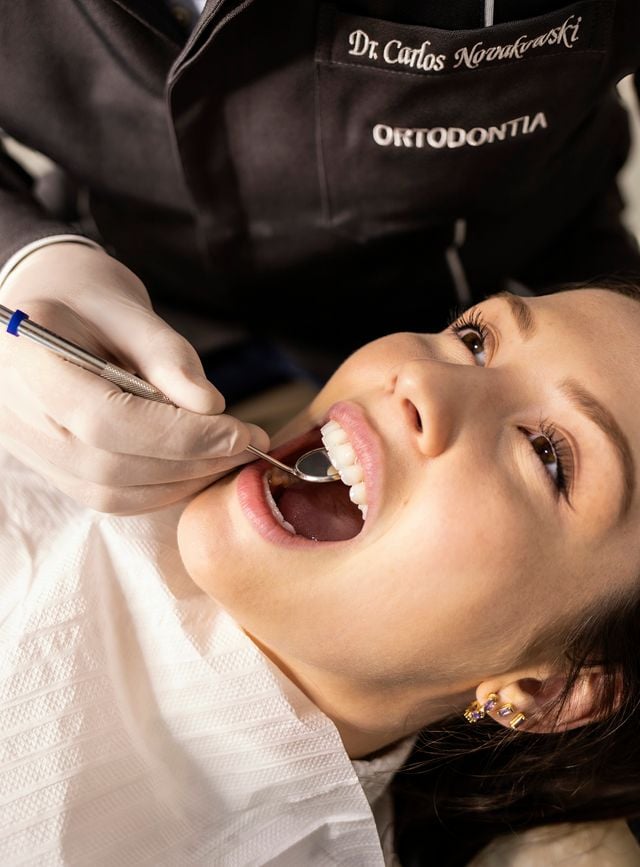 Strongest evidence: oral mucositis. Mucositis is a painful inflammation of the lining of the mouth as a result of radiotherapy or chemotherapy. The international MASCC and ISOO guideline recommends photobiomodulation to prevent mucositis in patients receiving a stem cell transplant and in radiotherapy of the head and neck. For treating existing mucositis and for mucositis caused by chemotherapy, there is not yet enough evidence. This is a medical application with specific protocols, which must be carried out in a hospital.
Jaw joint complaints. A meta analysis (Hanna, 2021) is mentioned in umbrella reviews for pain in jaw joint complaints.
Gums, sensitive teeth, wound healing, dental implants. There are controlled studies and laboratory research pointing to less inflammation, faster wound healing after a tooth extraction and less tooth sensitivity. These are mostly small studies with different protocols. See this as promising and not as proven.
In practice
- In the studies, 630 and 660 nm are often used for red light, and 810 and 830 nm for near infrared light.
- Doses are around 1 to 10 J/cm² for superficial tissues and 10 to 50 J/cm² for deeper tissues. With the Torch 2.0 and skin contact, that comes down to roughly 30 seconds to 4 minutes for the superficial dose and 4 to 20 minutes for the deep dose, possibly spread over several sessions.
- You can use the Torch in two ways: with the convex lens through the outside of the cheek, or with the attachment directly in the mouth on a molar or on the gum.
- Choose short, daily sessions and consult your dentist beforehand.
Naturopathic and orthomolecular for the mouth and gums
- Vitamin C and coenzyme Q10 support the gums and the energy in the tissue.
- Vitamin D3 and K2, calcium and magnesium are important for jaw bone and teeth.
- Omega 3 supports the inflammation balance, also with gum problems.
- Probiotics for the mouth and good oral hygiene support a healthy oral flora.
- Oil pulling or herbal rinses, such as sage or chamomile, can be supportive.
- The foundation remains: brushing twice a day with toothpaste (fluoride), cleaning between your teeth daily and regular visits to the dentist or dental hygienist.
The thyroid
An underactive thyroid causes fatigue, cold hands and a slow metabolism. The most common cause is Hashimoto’s disease, an autoimmune disease. The studies here are not large, but they are interesting.
What does the research say?
- Höfling and colleagues (2013). A controlled study with a placebo group. 43 patients with hypothyroidism caused by Hashimoto’s received ten sessions of 830 nm laser light on the thyroid. In the treated group, thyroid antibodies fell and less thyroid hormone was needed. According to the authors, in the follow up almost half of the treated patients no longer needed levothyroxine. The long term follow up also showed that the light was safe, with no increase in nodules.
- Ercetin and colleagues (2020). A study in 350 people with Hashimoto’s showed improvement in the T3 to T4 ratio and in quality of life, with less need for hormone replacement.
- Berisha Muharremi and colleagues (2023). In women with Hashimoto’s, light plus supplements was compared with supplements alone, with a follow up of six months. The group with light did better.
- There are now several reviews and meta analyses, but the total group of participants remains small and the protocols differ. More research is needed.
In practice
- If you place the Torch directly on the thyroid, the light really passes through it. Start with sessions of about one minute, preferably in the morning or afternoon.
- With a small device the systemic effect is smaller. If you still want to make use of it, you can choose spots such as the wrist and the navel (so called systemic blood irradiation).
- Do you take thyroid medication? If the thyroid starts working better, your doctor may need to review the dose. Never change your medication yourself.
- If in doubt, first have TSH, free T4, free T3 and possibly TPO antibodies measured.
Naturopathic and orthomolecular for the thyroid
- Selenium. Needed for the conversion of T4 to T3 and for the protection of thyroid cells.
- Zinc and iron (ferritin). A low ferritin can slow down thyroid function.
- Vitamin D, B12 and magnesium. Often too low in thyroid complaints. For vitamin D there are also indications that supplementation can lower the antibodies.
- Iodine. Be careful with this. Both a shortage and an excess can cause complaints, and with Hashimoto’s extra iodine is not always desirable. Only supplement it after laboratory tests or consultation.
- Ashwagandha and other herbs can affect thyroid values. Only use them in consultation.
Sources
- Systematic review of controlled studies on photobiomodulation in chronic pain. Frontiers in Integrative Neuroscience, 2026.
- Alayat MSM et al. Effectiveness of photobiomodulation therapy in the treatment of myofascial pain syndrome of the upper trapezius muscle: a systematic review and meta analysis. Photobiomodulation, Photomedicine, and Laser Surgery, 2022.
- Morgan RM et al. Effects of photobiomodulation on pain and return to play of injured athletes: a systematic review and meta analysis. Journal of Strength and Conditioning Research, 2024.
- Luo et al. Effects of low level laser therapy on muscular performance and soreness recovery in athletes: a meta analysis of randomized controlled trials. Sports Health, 2022.
- Umbrella review of meta analyses on photobiomodulation across multiple health outcomes. Systematic Reviews, 2025.
- Wunsch A, Matuschka K. A controlled trial to determine the efficacy of red and near infrared light treatment in patient satisfaction, reduction of fine lines, wrinkles, skin roughness, and intradermal collagen density increase. Photomedicine and Laser Surgery, 2014.
- Zadik Y et al. Systematic review of photobiomodulation for the management of oral mucositis in cancer patients and clinical practice guidelines. Supportive Care in Cancer, 2019. And the MASCC and ISOO guideline, Cancer, 2020.
- Höfling DB et al. Low level laser in the treatment of patients with hypothyroidism induced by chronic autoimmune thyroiditis: a randomized, placebo controlled clinical trial. Lasers in Medical Science, 2013. And the long term follow up, 2018.
- Ercetin C et al. Impact of photobiomodulation on T3 and T4 ratio and quality of life in Hashimoto thyroiditis. Photobiomodulation, Photomedicine, and Laser Surgery, 2020.
- Berisha Muharremi V et al. Efficacy of combined photobiomodulation therapy with supplements versus supplements alone in restoring thyroid gland homeostasis in Hashimoto thyroiditis. Journal of Personalized Medicine, 2023.
- Kavyani Z et al. Efficacy of the omega 3 fatty acids supplementation on inflammatory biomarkers: an umbrella meta analysis. International Immunopharmacology, 2022.
- Stausholm MB et al. Efficacy of low level laser therapy on pain and disability in knee osteoarthritis: systematic review and meta analysis of randomised placebo controlled trials. BMJ Open, 2019.
- Brosseau L et al. Low level laser therapy (Classes I, II and III) for treating rheumatoid arthritis. Cochrane Database of Systematic Reviews.
- VIVO Red Light Therapy, Michel Peters. LED gezichtsmaskers: hype of zinvol voor je huid? (in Dutch). Blog. Source of the LED mask measurement results.
Disclaimer
The information in this blog is intended as general information and does not replace medical advice, diagnosis or treatment. If you have a serious condition or use medication (for example blood thinners, anti inflammatory drugs or thyroid medication), always consult your GP or treating specialist before you start light therapy or supplements. Extra caution is advised in case of pregnancy, epilepsy or light sensitivity.
Continue with part 4: gut, immune system, hormones and your own routine.
Take care of yourself!
With love,
Wilma
 Beauty Producten
 Merken van A-Z
 Welzijn
 Gezondheid / Voeding