
 SHOP
SHOP




 Dutch Health Store Collection
 English
 Nederlands
 Deutsch
Votre Beaute,Guide & Informations,Vivo Red Light,Wilma
Red light and the effect on your blood sugar level
Sep
Wilma explains:
Red Light Therapy and Blood Sugar: What a New Study Tells Us
Do you know that feeling of suddenly running out of energy halfway through the afternoon, or a craving for something sweet that is hard to ignore? That can be a sign that your blood sugar is not quite in balance.
Symptoms such as fatigue, headaches, dizziness and feeling easily irritated are often linked to swings in blood sugar levels. Over time, these fluctuations can contribute to more serious health issues, including diabetes, nerve damage and problems with the heart and blood vessels.
Your hormone balance, your weight, your energy levels and how well you sleep are all closely connected to stable blood sugar. Diet, regular movement and lower stress are well known ways to support it. In this blog, we look at a less familiar but promising approach: red light therapy.
Red light therapy in short
Red light therapy, also known as photobiomodulation, uses specific wavelengths of red and near infrared light. This light reaches into your cells and activates the mitochondria, the energy factories of the cell. The result is a higher production of ATP, the fuel your cells use to do their work.
What recent research shows
Researchers Michael Powner and Glen Jeffery, from University College London, investigated whether red light affects blood sugar levels after eating. They tested this in a group of healthy participants.
How the study was set up
Thirty healthy individuals took part, split into two groups: a red light therapy group and a placebo group. Every participant completed two fasting oral glucose tolerance tests to assess how their body processes glucose. Before the second test, the red light group received 15 minutes of red light exposure on the upper back. Blood sugar levels and exhaled CO2 were measured and analysed during the tests.
The results
The group that received red light therapy showed a clear reduction: their blood sugar level came out 27.7 percent lower than the placebo group after drinking the glucose solution.
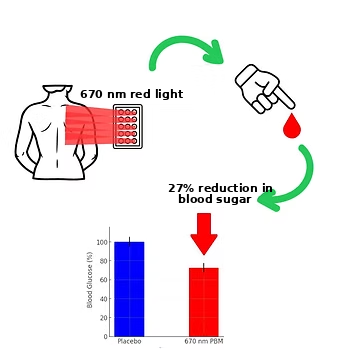
The highest measured value also dropped, by 7.5 percent. The higher CO2 levels in this group suggest that glucose was being converted into energy more efficiently.
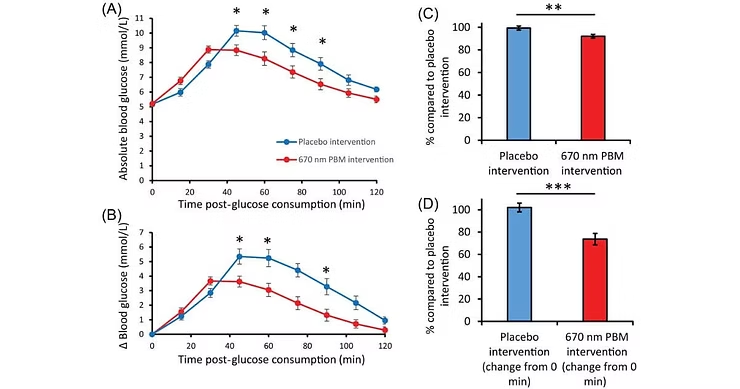
Source: Powner, M. B. & Jeffery, G. (2024). Light stimulation of mitochondria reduces blood glucose levels. Journal of Biomedical Optics, 17(5), e202300521. DOI: 10.1002/jbio.202300521.
670 nm red light leads to a 27 percent reduction in blood sugar
Why this matters to you:
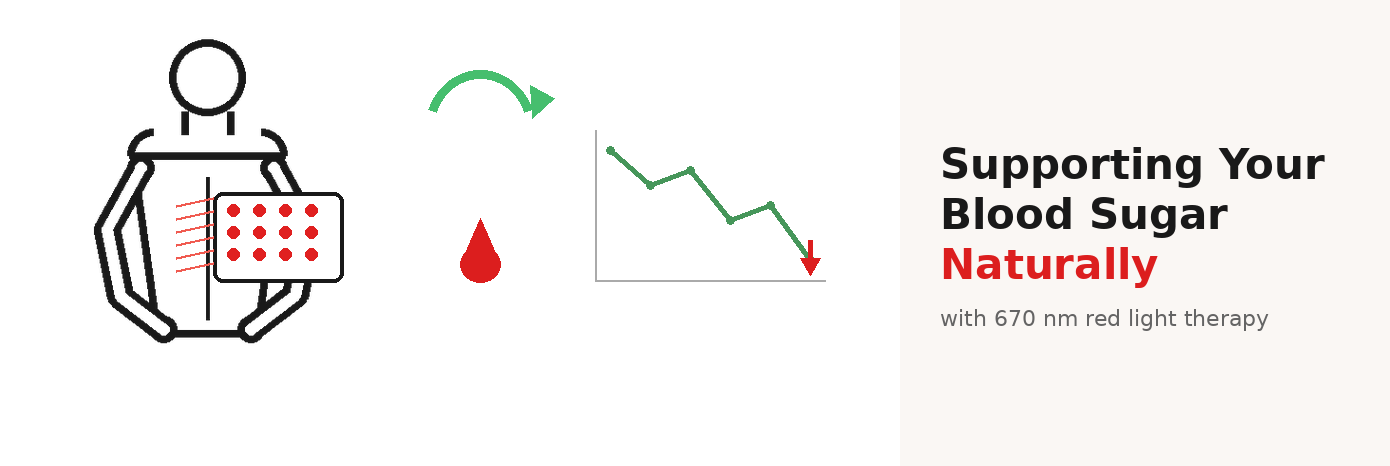
Change in blood sugar level after red light exposure:
A more stable blood sugar level can contribute to how you feel in several ways.
More stable energy and mood. Without sharp peaks and dips in blood sugar, you are less likely to feel tired during the day or experience mood swings.
Lower risk of complications over time. A lower, more stable blood sugar level reduces the risk of issues affecting the heart, blood vessels, kidneys and nerves.
Easier weight management. With a stable blood sugar level you feel hungry less quickly, which makes it easier to stick to healthier choices.
Deeper sleep. A well regulated blood sugar level supports better sleep quality, which in turn affects how you feel the next day.
How red light creates this effect
It all comes down to the mitochondria. When exposed to 670 nanometre deep red light, they work more efficiently, producing more ATP. This gives cells more energy to work with, and to meet that demand they draw more glucose from the blood. The result is a lower blood sugar level.
Not just local, but throughout the body
Interestingly, this effect is not limited to the spot where the light touches the skin. Through signalling molecules called cytokines, the improved cell function spreads through the body, creating a broader effect on blood sugar regulation.
How much red light do you need
In the study by Powner and Jeffery, a single 15 minute session on the upper back was already enough to produce a measurable effect. For lasting results, it is recommended to repeat this several times a week over a longer period.
The researchers used a light intensity of 40 milliwatts per square centimetre, measured at 40 centimetres from the skin. The instrument used to measure this intensity was not specified.
Could you achieve the same result with a different strength or distance? There is no hard evidence for this yet, but it seems plausible. For many other light therapy applications, the effective dosage range tends to be fairly wide.
As a rough guideline to approach the results from this study, you could consider:
- Lux 35 , 30 minutes on the upper back, at 5 centimetres distance: less/not suitable
- Lux 60, 20 minutes on the upper back, at 10 centimetres distance: less suitable
- Lux 150, 10 minutes on the upper back, at 20 centimetres distance: comparable to the study
- Lux 300, 10 minutes on the upper back, at 20 centimetres distance: comparable to the study
- Lux 450, 10 minutes on the upper back, at 25 centimetres distance: comparable to the study
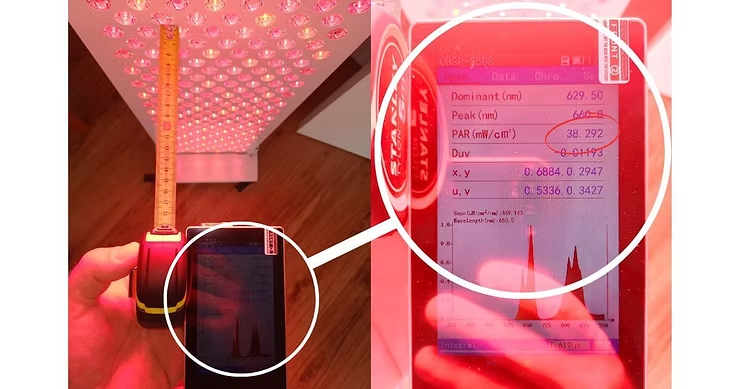
These values were determined using an OHSP 350S spectrometer.
Red light at the right dosage lowers blood sugar levels
Why direct skin contact makes a difference
The study used 40 milliwatts per square centimetre at 40 centimetres distance, for 15 minutes. However, light that hits the skin is largely reflected away: this loss can reach up to 90 percent. This means the amount of light energy that actually reaches your cells is, in reality, much lower than the set value.
A light therapy panel that you place directly against the skin avoids much of this loss. Because less light is reflected away, less light power is needed to achieve the same effect.
Thanks to this more efficient absorption, the BioPhoton 3.0 only needs 15 minutes on the upper back. For the BioPhoton+, that is even 10 minutes to support your blood sugar.
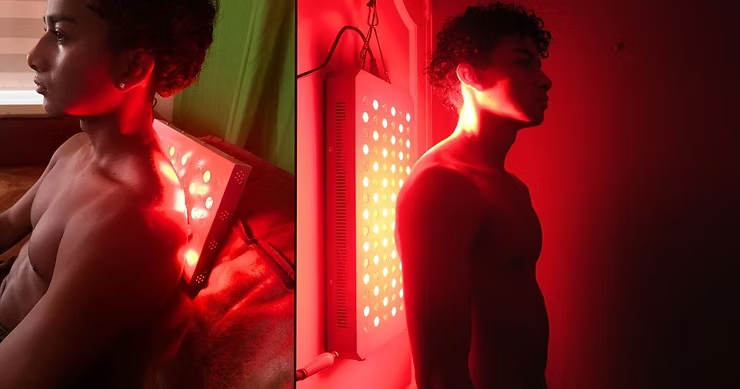
Red light therapy treatment for blood sugar support
What about blue light
Alongside red light, blue light has also been studied in relation to blood sugar and metabolism. This type of light is common in indoor lighting and in the screens of your phone, laptop and tablet.
Research shows that exposure to blue light, both during the day and in the evening, affects how your body processes glucose. Evening exposure in particular led to higher blood sugar and greater insulin resistance.
In other words, blue light in the evening can disrupt glucose metabolism and contribute to weight gain and other metabolic issues. It also made participants feel less sleepy closer to bedtime.
The takeaway: not all light works the same way. Try to limit screen time in the evening, and make sure you get enough red light instead.
In conclusion
This study shows that red light therapy can be a safe, natural way to lower and stabilise blood sugar levels. By activating the mitochondria, cells produce more energy and absorb more glucose from the blood, resulting in a lower blood sugar level.
For anyone looking for a natural way to bring their blood sugar into balance, this research offers encouraging insights. Red light therapy can support your overall health, a healthy weight, more energy during the day and better sleep at night.
 Produits de beauté
 Marques A-Z
 Bien-être
 santé et nutrition